

Date Issued – 20th February 2026
Courtesy of the Research Department at Balfour Capital Group
Key Points
- Oil Risk Premium Builds: Crude prices climbed above $66 as President Trump signaled a decision on potential Iran strikes within 10 days, raising concerns over Strait of Hormuz supply flows.
- U.S.–Iran Tensions Escalate: Military buildups and stalled nuclear negotiations have heightened geopolitical uncertainty across energy markets.
- Nvidia Expands AI Bet: The chipmaker is in talks to invest up to $30 billion in OpenAI at a reported $730 billion valuation, reinforcing capital concentration in AI infrastructure.
- Markets Await Catalysts: Equities remain cautious ahead of GDP and PCE inflation data, along with a potential Supreme Court ruling on tariffs.
February Economic Calendar
- Feb 21 — U.S. GDP (Q4): Key measure of economic momentum entering 2026.
- Feb 21 — U.S. PCE Inflation: The Fed’s preferred inflation gauge; critical for rate expectations.
- Feb 24 — U.S. Durable Goods Orders: Signals business investment trends.
- Feb 25 — U.S. Consumer Confidence: Reflects household sentiment and spending outlook.
- Feb 26 — U.S. New Home Sales: Provides insight into housing market resilience.
Markets Hold Steady as Geopolitics and AI Capital Dominate Headlines
U.S. equities remained under pressure as investors balanced rising geopolitical tensions with critical economic data ahead. The Dow fell 267 points (-0.5%), while the S&P 500 and Nasdaq each slipped roughly 0.3%. Futures were little changed overnight as markets awaited fourth-quarter GDP data, expected at 2.5%, and the Fed’s preferred PCE inflation reading, forecast at 2.8% year over year.
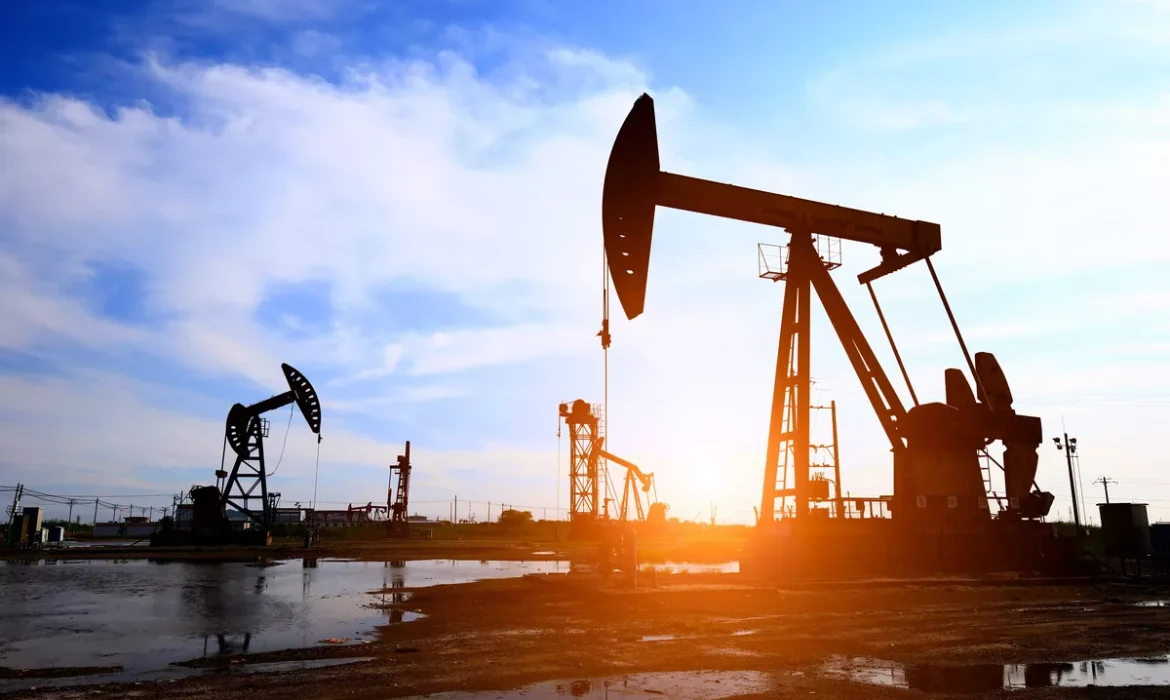
Meanwhile, oil prices climbed amid escalating U.S.-Iran tensions, adding a geopolitical risk premium to energy markets and reinforcing investor caution across risk assets.
Oil Rallies as Trump Weighs Military Action Against Iran
President Donald Trump said he will decide within 10 days whether to launch military strikes against Iran, fueling concerns over potential supply disruptions in the Strait of Hormuz. U.S. crude (WTI) rose 1.9% to $66.43, while Brent gained 1.86% to $71.66, extending weekly gains above 5%.
A significant U.S. military buildup is underway in the region, including two aircraft carriers, while Iran has conducted military exercises and partially restricted activity near the strait. Energy markets are closely monitoring diplomatic talks, though officials remain far apart on key nuclear issues.
White House Urges Iran Deal as Military Tensions Escalate
The White House warned Tehran it would be “very wise” to make a nuclear agreement, as joint Russia-Iran naval drills and increased U.S. deployments heighten regional risk. Analysts describe the situation as “extremely dangerous,” with both sides reinforcing assets across the oil-producing Middle East.
Approximately 13 million barrels per day — about 31% of global seaborne crude — transited the Strait of Hormuz last year, underscoring the market’s sensitivity to disruptions. While diplomacy remains the stated priority, markets are pricing elevated geopolitical uncertainty.
Nvidia in Talks for $30 Billion OpenAI Investment
Nvidia is reportedly negotiating an investment of up to $30 billion in OpenAI as part of a funding round that could value the AI company at $730 billion pre-money. The proposed investment is separate from the previously announced $100 billion infrastructure partnership between the firms and is not tied to deployment milestones.
The broader round could total around $100 billion and may include other strategic investors. The discussions highlight continued concentration of capital in AI infrastructure and reinforce Nvidia’s central role in the sector’s long-term growth trajectory.
Conclusion
Financial markets are navigating a complex environment defined by geopolitical risk, policy uncertainty, and structural investment shifts in artificial intelligence. Rising U.S.-Iran tensions have injected volatility into energy markets, while investors await key economic data that could shape the Federal Reserve’s next move.
At the same time, Nvidia’s potential multibillion-dollar investment in OpenAI underscores sustained capital deployment into AI infrastructure. With equities broadly range-bound and multiple catalysts ahead, near-term market direction is likely to be driven by macroeconomic data releases and geopolitical developments.
Investment Insights
- Energy Risk Premium Rising: Escalating Middle East tensions support short-term strength in crude and energy-linked equities.
- Macro Catalysts Ahead: GDP and PCE inflation data will be critical for resetting rate expectations and bond yields.
- AI Capital Concentration: Nvidia’s proposed OpenAI investment reinforces long-term structural demand for AI infrastructure.
- Volatility Likely Elevated: Geopolitical uncertainty and policy decisions may keep markets range-bound but reactive.
Disclaimer: This newsletter provides financial insights for informational purposes only. It does not constitute financial advice or recommendations for investment decisions.