

Daily Synopsis of the Asia market close – October 6, 2025
Date Issued – 6th October 2025
Courtesy of the Research Department at Balfour Capital Group
Key Points
- Japan’s Market Rally on Takaichi’s Victory: Japan’s Nikkei 225 surged nearly 5% to a record high after Sanae Takaichi’s leadership win in the Liberal Democratic Party fueled optimism for pro-growth policies, while the yen weakened past 150 per dollar.
- Big Tech Delays India Expansion: U.S. tech giants paused major data center deals in India amid escalating trade tensions and tariff hikes, signaling growing uncertainty in cross-border digital infrastructure investments.
- France’s Political Turmoil Hits Markets: European stocks fell as France’s CAC 40 dropped 2% following the sudden resignation of Prime Minister Sebastien Lecornu, sparking renewed political instability and driving bond yields higher.
- Cautious Return to China: Foreign investors are selectively reentering Chinese markets after record outflows, drawn by tech gains and policy pledges, but lingering capital controls and opaque regulations continue to restrain confidence.
Japan Stocks Soar as Takaichi Victory Weakens Yen to 150
Japan’s Nikkei 225 surged 4.75% to a record 47,944.76 after the ruling Liberal Democratic Party elected conservative Sanae Takaichi as its new leader, setting her on course to become Japan’s first female prime minister. Gains were broad-based, led by real estate, industrial, and tech sectors, with Yaskawa Electric soaring over 20%.
Takaichi is expected to maintain an accommodative monetary stance while promoting public-private investment, reinforcing a “high-pressure economy” approach.
The yen slid past the key 150-per-dollar level, prompting renewed intervention concerns, while bond yields climbed amid speculation of a gradual policy shift by the Bank of Japan.
Big Tech Pauses India Data Center Deals Amid U.S.-India Trade Strains
Major U.S. technology firms, including Amazon, Microsoft, and Google, have delayed leasing large data centers in India as escalating trade tensions cloud investment clarity. New projects have been on hold for over two months following Washington’s tariff hikes on Indian exports and new visa fees affecting Indian tech workers. Industry executives cite higher equipment costs and legal uncertainty as key deterrents.
While India’s data center capacity is still expected to triple by 2030, hyperscalers are adopting a cautious stance, incorporating tariff and legal risk clauses into contracts as they await greater trade stability before resuming expansion.
French Markets Slide as Prime Minister’s Resignation Sparks Political Turmoil
European equities retreated Monday, led by a sharp sell-off in France, after Prime Minister Sébastien Lecornu resigned less than a month into office, triggering renewed political uncertainty. The CAC 40 dropped 2%, while the Stoxx 600 slipped 0.4% following last week’s record highs. French banks tumbled over 5% amid concerns about government instability and fiscal gridlock, pushing 10-year bond yields to 3.6% and sending the euro 0.7% lower.
Broader sentiment remained cautious across Europe, with investors eyeing economic data from Spain and the U.K. for signs of resilience amid rising political and monetary volatility.
Foreign Investors Reassess China Amid Cautious Optimism and Policy Risks
Foreign investors are slowly regaining interest in Chinese markets after years of outflows, but deep concerns over capital controls, policy opacity, and state intervention persist. Despite Beijing’s pledges to open its economy and court foreign capital, uncertainty over market access and exit mechanisms continues to deter long-term institutional investment.
Capital outflows reached $154 billion in 2024, the lowest in over two decades, though recent buying by global hedge funds and the strong performance of Chinese tech stocks — with the Hang Seng Tech Index up 48% year-to-date — suggest selective optimism returning to the market.
Conclusion
Global markets began the week navigating a mix of optimism and caution.
Japan’s record-breaking rally underscored investor confidence in pro-growth leadership, while renewed political instability in France and trade frictions between the U.S. and India reminded markets of ongoing geopolitical vulnerabilities.
Meanwhile, foreign investors’ tentative return to China signals selective risk appetite amid structural uncertainty. Across regions, market sentiment remains resilient but cautious, balancing growth opportunities against fiscal, political, and regulatory headwinds.
As central banks maintain accommodative stances and inflation cools, investors appear poised to favor selective exposure in markets showing credible reform and stability momentum.
Investment Insights
- Japan’s momentum trade: The Nikkei’s record surge reflects renewed optimism in Japan’s pro-growth fiscal stance and weak yen tailwinds — signaling potential upside in Japanese equities and exporters.
- Tech caution in emerging markets: U.S. hyperscalers’ pause in India underscores the sensitivity of global tech expansion to trade policy; investors should monitor tariff developments before increasing exposure.
- European political risk premium: France’s leadership turmoil may introduce short-term volatility in European financials and sovereign bonds, warranting defensive positioning.
- China re-entry strategy: Gradual foreign inflows into Chinese equities highlight selective confidence — focus on tech and consumer recovery plays while hedging policy and liquidity risks.
Economic Calendar
| Date | Event | Why It Matters |
|---|---|---|
| October 6, 2025 | Eurozone Retail Sales (Aug) | Provides insight into consumer demand and influences ECB growth outlook. |
| October 10, 2025 | U.S. Nonfarm Payrolls & Unemployment Rate (Sep) | Central labor market reading that heavily influences Fed rate path expectations. |
| October 15, 2025 | U.S. Consumer Price Index (Sep) | Key inflation measure affecting real yields and central bank decisions. |
| October 16, 2025 | U.S. Retail Sales (Sep) | Reflects consumer spending and provides momentum for GDP forecasts. |
| October 16, 2025 | U.K. Monthly GDP (Aug) | Snapshot of the U.K. growth trend, relevant for BoE outlook. |
| October 17, 2025 | Eurozone HICP Final (Sep) | Final inflation read that validates ECB’s policy stance. |
Disclaimer: This newsletter provides financial insights for informational purposes only. It does not constitute financial advice or recommendations for investment decisions.

Daily Synopsis of the New York market close – October 3, 2025
Date Issued – 3rd October 2025
Courtesy of the Research Department at Balfour Capital Group
Key Points
- Boeing 777X Delay: Boeing postponed the debut of its 777X jet to 2027, with potential charges up to $4 billion, deepening financial strain as certification hurdles persist and major customers push back fleet plans.
- Hitachi–OpenAI Partnership: Hitachi shares surged over 10% after announcing a global AI infrastructure partnership with OpenAI, boosting Japan’s Nikkei 225 amid broader optimism in tech-led growth.
- European Stocks Extend Rally: The Stoxx 600 hit fresh highs, led by bank and defense names, as Europe logged a fifth consecutive session of gains, supported by tech momentum and easing inflation in Switzerland.
- UBS Precious Metals Outlook: UBS raised gold and silver forecasts to $4,200 and $55 an ounce respectively, citing strong safe-haven demand, central bank buying, and supportive macro conditions.
Boeing’s 777X Faces New Delay, $4B Potential Charge
Boeing has postponed the commercial debut of its 777X widebody jet to early 2027, adding another year to a program already six years behind schedule. The delay could result in a non-cash charge of up to $4 billion, deepening financial strain on a program that has accumulated more than $11 billion in overruns. Certification bottlenecks with the FAA, rather than new technical flaws, are the main cause.
Launch customers Lufthansa and Emirates have adjusted fleet plans accordingly, while investors await clarity when Boeing reports earnings on Oct. 29.
Hitachi Jumps on OpenAI Deal, Nikkei Leads Asia Gains
Hitachi shares surged more than 10% after announcing a global AI infrastructure partnership with OpenAI, driving the Nikkei 225 up 1.85% to 45,769.50. Broader Asian markets were mixed, with Chinese and South Korean exchanges closed for holidays and Hong Kong’s Hang Seng slipping 0.54%. Japan’s unemployment rate edged up to 2.6% in August, while services PMI showed steady expansion despite weaker manufacturing.
In the U.S., all major indexes closed at record highs, led by Nvidia’s rally to a new peak, even as the government shutdown delayed key economic data releases including nonfarm payrolls.
European Stocks Extend Rally to Record Highs
European equities extended their winning streak Friday, with the Stoxx 600 up 0.4% after touching fresh record highs and on track for a weekly gain above 2%. London’s FTSE 100, Switzerland’s SMI, and Italy’s FTSE MIB each added around 0.5%, while Austria’s Raiffeisen Bank jumped 6.3% on reports the EU may lift sanctions on a Russian oligarch tied to its operations.
Tech momentum, fueled by OpenAI’s $500 billion valuation, supported broader market sentiment, while aerospace and defense stocks gained after new security initiatives. Investors continue to track the U.S. shutdown’s potential drag on global growth.
UBS Lifts Gold and Silver Forecasts on Strong Demand
UBS has once again raised its gold and silver price forecasts, citing resilient investor demand, macroeconomic uncertainty, and fiscal pressures as key drivers. The bank now projects gold to reach $4,200 an ounce and silver to climb as high as $55, up from previous targets of $3,800 and $47. Strategists flagged stronger central bank and ETF demand, alongside persistent dollar weakness and falling real rates, as supportive factors.
With silver showing greater upside volatility, UBS expects the gold-silver ratio to narrow toward 76x. Both metals have surged this year, with gold at record highs and silver up 60% year-to-date.
Conclusion
This week’s developments highlight a complex but opportunity-rich landscape for investors.
Boeing’s prolonged 777X delays underscore persistent risks in aerospace, while Hitachi’s partnership with OpenAI reflects the accelerating integration of AI into global infrastructure.
In Europe, equity markets continue to gain momentum, supported by both financial and defense sectors, even as macro risks remain.
Meanwhile, UBS’s upward revisions to gold and silver forecasts reinforce the strong bid for safe-haven assets amid geopolitical and fiscal uncertainty.
Together, these shifts point to a market environment where diversification and sector-specific positioning remain critical to capturing resilient growth.
Investment Insights
- Aerospace: Boeing’s 777X delay signals extended supply-chain and certification risks; investors should watch for ripple effects across airlines and aircraft lessors.
- Technology & AI: Hitachi’s OpenAI partnership highlights rising demand for AI infrastructure; opportunities lie in semiconductor, cloud, and data center ecosystems.
- European Equities: Record-breaking gains in the Stoxx 600 show resilience, but exposure to defense and financials may provide the best relative value amid geopolitical shifts.
- Precious Metals: UBS’s bullish outlook on gold and silver reinforces the role of safe-haven assets; rising central bank demand supports portfolio hedging strategies.
Economic Calendar
| Date | Event | Why It Matters |
|---|---|---|
| October 3, 2025 | U.S. ISM Services PMI (Sep) | Timely read on services activity, prices, and employment; key for growth and inflation now that federal data are disrupted. |
| October 6, 2025 | Eurozone Retail Sales (Aug) | Gauge of euro area consumption momentum; informs ECB growth assessment. |
| October 10, 2025 | U.S. Nonfarm Payrolls (Sep) — subject to shutdown delay | Primary labor-market signal steering Fed cuts; release may be postponed during the government shutdown. |
| October 15, 2025 | U.S. CPI (Sep) — schedule may slip if shutdown persists | Core inflation print crucial for Fed path and real-rate backdrop; watch for potential delay due to agency closures. |
| October 16, 2025 | U.S. Retail Sales (Sep) | High-frequency read on consumer demand and GDP tracking; feeds “control group” used in nowcasts. |
| October 16, 2025 | U.K. Monthly GDP (Aug) | Checks U.K. growth pulse and BoE easing expectations amid soft PMIs and persistent tariff headwinds. |
Disclaimer: This newsletter provides financial insights for informational purposes only. It does not constitute financial advice or recommendations for investment decisions.

Daily Synopsis of the New York market close – October 2, 2025
Date Issued – 2nd October 2025
Courtesy of the Research Department at Balfour Capital Group
Key Points
- Shutdown Fuels Fed Cut Bets: Markets now price a 100% chance of an October Fed rate cut and an 88% chance of another in December, as the government shutdown heightens downside risks and data delays.
- Oil Gains on Russia Sanctions Risk: Crude prices edged higher on fears of tighter sanctions on Russian oil, though oversupply concerns and rising inventories capped the rally.
- OpenAI Hits $500B Valuation: The company finalized a $6.6B secondary share sale at a record $500B valuation, underscoring investor demand and employee confidence amid intensifying AI competition.
- Taiwan Rejects U.S. Chip Plan: Taipei dismissed Washington’s proposal for a 50-50 chip production split, focusing instead on tariff negotiations and defending its strategic “silicon shield.”
Fed Rate Cuts Now Seen as Certain Amid Shutdown
The U.S. government shutdown has reinforced market expectations for imminent Federal Reserve easing, with futures pricing a 100% probability of a rate cut in October and an 88% chance of another in December, according to CME FedWatch.
Analysts argue that prolonged data delays and the risk of permanent federal job losses will push the Fed to prioritize downside risks over inflation concerns. While tariffs could lift prices in the near term, most officials see the impact as temporary, leaving Chair Powell positioned to advance a risk-management strategy of successive cuts through year-end.
Oil Steadies on Russia Sanctions Risk, Capped by Oversupply
Oil prices edged higher after three days of losses, supported by prospects of tighter sanctions on Russian crude and Chinese stockpiling demand, though oversupply concerns limited gains. Brent rose 0.31% to $65.55 and WTI gained 0.32% to $61.98, rebounding from multi-month lows. The G7 pledged to step up pressure on Russian oil buyers, while reports said the U.S. will aid Ukraine in targeting Russian energy infrastructure.
Still, rising U.S. inventories, weak demand signals, and expectations that OPEC+ could raise output by up to 500,000 barrels per day in November continue to weigh on market sentiment.
OpenAI Closes $6.6B Share Sale at $500B Valuation
OpenAI completed a $6.6 billion secondary share sale at a $500 billion valuation, cementing its position as the world’s most valuable private company and surpassing SpaceX.
The deal, which fell short of the $10.3 billion authorized, is seen internally as a sign of employee confidence in long-term prospects, with fewer staff opting to sell shares. Major investors included Thrive Capital, SoftBank, and T. Rowe Price.
The sale highlights strong market appetite for AI leaders despite intensifying competition for talent, as secondary offerings become a key tool to retain employees without going public.
Taiwan Rejects U.S. ‘50-50’ Chip Production Plan
Taiwan has rejected Washington’s proposal to produce half of America’s semiconductors locally, with trade talks instead focusing on tariffs and exemptions from reciprocal duties currently set at 20%.
Vice Premier Cheng Li-chiun confirmed that the “50-50” plan, floated by U.S. Commerce Secretary Howard Lutnick, was not on the negotiating table.
Taiwanese leaders strongly criticized the idea, calling it exploitative and a threat to the island’s “silicon shield” — its strategic dominance in advanced chipmaking through TSMC. The dispute underscores tensions between U.S. efforts to onshore production and Taiwan’s determination to protect its technology base.
Conclusion
Global markets are navigating a complex mix of political and economic forces, from Washington’s shutdown fueling expectations of accelerated Fed rate cuts to renewed volatility in energy markets amid Russian sanctions risks.
Meanwhile, technology and innovation remain in sharp focus, with OpenAI’s record $500 billion valuation underscoring investor conviction in AI’s transformative role, even as Taiwan pushes back against U.S. pressure to rebalance semiconductor production.
For investors, the coming weeks will hinge on central bank policy signals, energy supply dynamics, and the evolving U.S.-China-Taiwan relationship—all critical drivers shaping both near-term sentiment and long-term strategic positioning.
Investment Insights
- Monetary Policy Shift: The U.S. government shutdown strengthens the case for multiple Fed rate cuts, supporting bonds and rate-sensitive equities but raising longer-term inflation vigilance.
- Energy Markets: Oil remains capped by oversupply fears despite Russian sanctions, suggesting volatility ahead; hedging strategies and selective energy plays may offer opportunity.
- AI Valuations: OpenAI’s $500 billion valuation highlights investor appetite for AI, signaling continued momentum in private tech markets, though competition and talent costs remain risks.
- Geopolitical Chips: Taiwan’s rejection of U.S. production demands reinforces the strategic centrality of semiconductors; investors should monitor tariff negotiations and supply chain diversification themes.
Economic Calendar
| Date | Event | Why It Matters |
|---|---|---|
| October 2, 2025 | U.S. ISM Manufacturing PMI | Key gauge of U.S. factory activity, offering early signals on economic momentum and inflationary pressures. |
| October 4, 2025 | U.S. Non-Farm Payrolls & Unemployment Rate | Crucial labor market data guiding Fed policy; delayed by shutdown risks, but central to rate cut expectations. |
| October 8, 2025 | Eurozone Retail Sales (YoY) | Measures consumer demand across the eurozone, a key driver for ECB policy amid slowing growth. |
| October 9, 2025 | U.S. CPI Inflation (September) | The most closely watched inflation metric; pivotal for shaping Fed interest rate decisions. |
| October 10, 2025 | UK GDP (MoM) | Critical snapshot of UK growth trajectory amid trade headwinds and high inflation risks. |
| October 15, 2025 | U.S. Retail Sales | Primary indicator of consumer strength, accounting for two-thirds of U.S. GDP. |
Disclaimer: This newsletter provides financial insights for informational purposes only. It does not constitute financial advice or recommendations for investment decisions.

Daily Synopsis of the New York market close – October 1, 2025
Date Issued – 1st October 2025
Courtesy of the Research Department at Balfour Capital Group
Key Points
- Asia Markets Mixed as Shutdown Begins: Asian equities diverged as Japan’s Nikkei extended losses, while India and Korea posted gains; gold hit a fresh record amid resilient sentiment despite the U.S. government shutdown.
- Gold Surges to Record on Safe-Haven Demand: Spot gold touched $3,875 as U.S. shutdown risks and soft labor data bolstered expectations of Fed rate cuts, with traders eyeing $3,900–$4,000 as the next target.
- Dollar Slips on Shutdown and Data Risks: The dollar index dropped to a one-week low as the shutdown raised uncertainty around key economic data, reinforcing market bets on a Fed rate cut later this month.
- Yuan Nears Sterling in Global FX Rankings: The yuan’s share of daily FX turnover climbed to 8.5%, closing in on the British pound’s 10.2%, highlighting Beijing’s progress in currency internationalization.
Asia Markets Mixed Amid U.S. Shutdown Calm
Asian equities traded mixed as investors looked past the U.S. government shutdown, with sentiment shaped by central bank updates and sector moves. Japan’s Nikkei 225 fell 0.85% and the Topix lost 1.37% after the Bank of Japan’s Tankan survey showed manufacturing sentiment improving modestly but below expectations.
India’s RBI held rates steady at 5.5%, lifting the Nifty 50 and Sensex by 0.74% and 0.83%, respectively.
South Korea’s Kospi gained 0.91%, while Taiwan’s index rose 0.63% on strength in TSMC after Nvidia’s surge past $4.5 trillion in market value. Gold hit a record $3,875.32, underscoring safe-haven demand.
Gold Surges to Record as Shutdown Fuels Fed Cut Bets
Gold prices climbed to a record $3,875.32 per ounce as investors sought safe-haven assets amid the U.S. government shutdown and weakening labor market signals.
The dollar index slipped to a one-week low, enhancing gold’s appeal, while traders priced in a 25-basis-point Fed rate cut this month and another in December. U.S. futures also eased, reflecting uncertainty as the shutdown delays key economic data releases.
Analysts see upside targets near $4,000, with risks tied to dollar strength and potential hawkish Fed pivots. Silver followed gold’s rally, reaching a 14-year high, while platinum and palladium retreated.
Dollar Slips as Shutdown Clouds Fed Outlook
The dollar index fell to 97.635, its lowest in a week, as the U.S. government shutdown threatened to delay critical economic data, including Friday’s nonfarm payrolls. Investors now rely more heavily on private-sector indicators such as the ADP report, due later today. Markets are pricing a near-certain quarter-point Fed cut on October 29, with odds at 95%.
The euro touched $1.1767, while the yen strengthened to 147.46. In Japan, the BoJ’s Tankan survey showed improving sentiment, reinforcing hawkish signals ahead of policy speeches later this week, with traders assigning 40% odds to an October rate hike.
Yuan Nears Sterling in Global FX Rankings
The Chinese yuan’s share of global currency transactions rose to 8.5% in 2025, up from 7% in 2022, with daily turnover hitting $817 billion, according to the Bank for International Settlements. That puts it within striking distance of the British pound, whose market share fell to 10.2% from 12.9%. The shift highlights Beijing’s push to internationalize the yuan, though restrictions on capital flows still limit broader adoption.
Meanwhile, the Swiss franc surged to become the sixth most-traded currency, underscoring evolving dynamics in global FX markets as investors diversify beyond traditional majors.
Conclusion
The U.S. government shutdown has so far left equity sentiment largely intact, but its potential to delay critical economic data adds uncertainty to monetary policy signals.
Gold’s record highs and a weaker dollar underscore persistent demand for safe-haven assets, while Asian markets reflect diverging regional dynamics.
At the same time, the yuan’s growing role in global FX points to a gradual reshaping of currency flows.
Markets are entering October with a complex mix of resilience and caution.
Investors should prepare for volatility as fiscal, monetary, and geopolitical factors converge in the weeks ahead.
Investment Insights
- The U.S. government shutdown may heighten short-term volatility: Delayed data complicates Fed decision-making and increases reliance on private indicators.
- Record gold prices highlight investor demand for hedges: Political and economic uncertainty reinforces the case for strategic allocation to precious metals.
- A softer dollar and potential Fed rate cuts suggest opportunities: Non-USD assets, particularly select Asian equities and currencies, may benefit.
- The yuan’s rising share in global FX markets signals a long-term diversification trend: Implications for global reserve management and multinational portfolio strategies are growing.
Economic Calendar
| Date | Event | Why It Matters |
|---|---|---|
| October 2, 2025 | U.S. ISM Manufacturing PMI | Key gauge of U.S. factory activity, offering early signals on economic momentum and inflationary pressures. |
| October 4, 2025 | U.S. Non-Farm Payrolls & Unemployment Rate | Crucial labor market data guiding Fed policy; delayed by shutdown risks, but central to rate cut expectations. |
| October 8, 2025 | Eurozone Retail Sales (YoY) | Measures consumer demand across the eurozone, a key driver for ECB policy amid slowing growth. |
| October 9, 2025 | U.S. CPI Inflation (September) | The most closely watched inflation metric; pivotal for shaping Fed interest rate decisions. |
| October 10, 2025 | UK GDP (MoM) | Critical snapshot of UK growth trajectory amid trade headwinds and high inflation risks. |
| October 15, 2025 | U.S. Retail Sales | Primary indicator of consumer strength, accounting for two-thirds of U.S. GDP. |
Disclaimer: This newsletter provides financial insights for informational purposes only. It does not constitute financial advice or recommendations for investment decisions.
Daily Synopsis of the New York market close – September 30, 2025
Date Issued – 30th September 2025
Courtesy of the Research Department at Balfour Capital Group
Key Points
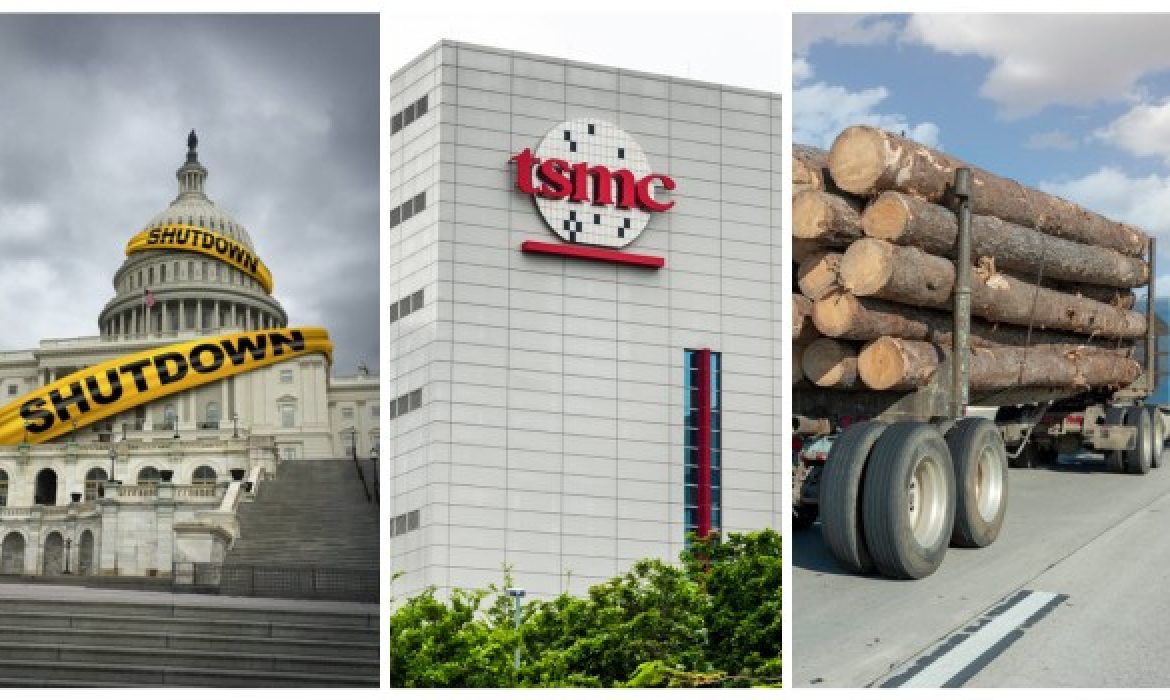
- U.S. Shutdown Risks: Trump threatens permanent federal furloughs, raising uncertainty for labor markets and economic data flow.
- Chip Supply Rebalance: Washington pushes Taiwan for a 50-50 chip production split, targeting $500B in U.S. investment to cut reliance on overseas supply chains.
- New Tariffs Introduced: Trump sets new tariffs on lumber, cabinets, and furniture, with duties rising to as high as 50% in January, heightening trade frictions.
- European Layoffs: European companies across autos, banking, energy, and consumer goods announce mass layoffs, underscoring pressure from weak demand and tariffs.
U.S. Shutdown Risks Loom With Threat of Permanent Furloughs
U.S. government shutdowns have historically had limited economic impact, but analysts warn this round could prove different as President Trump has threatened to make some federal furloughs permanent, raising the risk of lasting labor market disruptions. A prolonged shutdown would also delay the release of critical economic data, including the jobs report and inflation readings, potentially leaving the Federal Reserve without key inputs for policy decisions. While most economists see the overall hit to GDP as marginal, the uncertainty over federal employment and data flow introduces risks for markets already sensitive to labor conditions and monetary policy expectations.Washington Presses Taiwan for 50-50 Chip Production Split
The U.S. is pressing Taiwan to agree to a “50-50” arrangement in which half of America’s chip supply would be produced domestically, Commerce Secretary Howard Lutnick said, underscoring Washington’s drive to reduce reliance on Taiwanese semiconductors. Taiwan currently manufactures over 90% of the world’s advanced chips through TSMC, which services major U.S. tech firms. Lutnick outlined a goal of lifting U.S. chip output to 40% by the end of Trump’s term, requiring more than $500 billion in new investment. The plan reflects broader national security and trade concerns, as Washington seeks to balance supply resilience with Taiwan’s strategic role.Trump Imposes Tariffs on Lumber, Cabinets and Furniture
President Trump announced new tariffs on wood products, imposing 10% duties on imported timber and lumber and 25% on cabinets, vanities and upholstered furniture, with rates set to rise to 30% and 50% respectively in January. The measures, delayed until October 14, were justified under Section 232 on national security grounds, citing risks to defense-related supply chains. Canada, the largest softwood supplier, faces added pressure as Ottawa prepares aid for its producers, while Mexico and Vietnam, key furniture exporters, are also impacted. The tariffs add to broader trade frictions, raising costs for U.S. businesses and construction while challenging global partners.European Firms Cut Jobs Amid Economic Slowdown and Tariffs
A growing number of European companies across sectors are cutting jobs as weak demand, high costs, and U.S. tariffs weigh on profitability. Major carmakers including Bosch, Daimler Truck, Stellantis, Volkswagen, and Volvo have announced significant workforce reductions, while banks such as Commerzbank and Lloyds are pursuing cost-cutting through layoffs. Energy firm OMV, chipmaker STMicroelectronics, and luxury brands Burberry and LVMH are also scaling back staff, alongside cuts at Just Eat Takeaway, Lufthansa, and Novo Nordisk. The breadth of reductions underscores the mounting strain on Europe’s economy, with corporate restructuring accelerating in response to slowing growth and external trade pressures.Conclusion
Markets face a complex mix of political risk, trade disruptions, and corporate restructuring. The U.S. government shutdown threat introduces new uncertainty, particularly if prolonged furloughs weaken labor markets or delay critical data releases. Washington’s push to rebalance chip production signals sustained investment flows into semiconductors, but at the cost of heightened geopolitical friction. Expanding tariffs on lumber, furniture, and related goods highlight the administration’s continued reliance on protectionist policy, with broad cost implications. Meanwhile, Europe’s wave of corporate layoffs underscores the mounting strain on growth. Together, these developments reinforce a cautious outlook requiring selective positioning across assets.Investment Insights
- Policy risk: A U.S. shutdown could disrupt data visibility and labor conditions, complicating Fed policy assessments. Investors should monitor private-sector indicators as substitutes.
- Semiconductors: Washington’s drive for onshore chip production underscores long-term capital flows into U.S. manufacturing. Beneficiaries include domestic fabs, equipment suppliers, and construction firms tied to large-scale projects.
- Trade impact: New tariffs on lumber and furniture highlight continued inflationary pressures in housing-related sectors, with downstream effects for builders and retailers.
- Europe: Broad-based layoffs suggest weakening demand and margin pressure. Investors should be cautious on cyclical European equities while favoring defensive or export-led names.
Economic Calendar
| Date | Event | Why It Matters |
|---|---|---|
| October 2, 2025 | U.S. Durable Goods Orders & Factory Orders | Key measure of capital investment demand and business spending momentum. |
| October 2, 2025 | U.S. Initial Jobless Claims | Weekly labor market gauge, closely watched for signs of employment softness. |
| October 3, 2025 | U.S. Nonfarm Payrolls (September) | Most important labor market release, driving Fed policy expectations and market sentiment. |
| October 3, 2025 | U.S. Advance GDP & Chicago PMI | Early read on Q3 growth and manufacturing activity momentum. |
| Early October 2025 | Eurozone Manufacturing & Services PMI | Timely indicator of euro-area growth and ECB policy bias. |
Disclaimer: This newsletter provides financial insights for informational purposes only. It does not constitute financial advice or recommendations for investment decisions.

Daily Synopsis of the Asia market close – September 29, 2025
Date Issued – 29th September 2025
Courtesy of the Research Department at Balfour Capital Group
Key Points
- China Industrial Profits Surge: Profits rose 20.4% in August, led by upstream sectors as Beijing curbed excess supply and eased price competition.
- Sony Financial Group Debut: Shares gained 15.9% in Tokyo, boosting investor sentiment even as broader Japanese markets slipped.
- Global Market Moves: Equities firmed while the dollar eased; gold hit a record $3,819 amid U.S. shutdown risks and Fed policy expectations.
- Beyond AI: Investors are rotating into infrastructure, defense, healthcare, and energy as fiscal stimulus drives long-term opportunities.
China’s Industrial Profits Rebound 20% on Supply Curbs
China’s industrial profits jumped 20.4% in August, the strongest gain since late 2023, reversing three months of declines as Beijing tightened control over excess supply and price competition.
The rebound was driven by upstream industries, with raw material producers posting profit growth of 37.5% amid rising demand and prices. State-owned firms outperformed private peers, highlighting policy support in strategic sectors.
Still, the recovery remains uneven, with automakers and chemical producers reporting losses, while weak domestic demand and a sluggish property sector continue to weigh on the broader outlook, reinforcing expectations of further fiscal stimulus to stabilize growth.
Sony Financial Group Jumps 15% in Tokyo Market Debut
Sony Financial Group surged 15.9% in its Tokyo debut after briefly spiking 36%, valuing the unit at over $6.7 billion and underscoring investor appetite for financial services tied to the Sony brand.
The spin-off allows Sony to focus on semiconductors and entertainment while giving the financial arm room to raise growth capital independently. Broader Asia markets traded higher, with Hong Kong’s Hang Seng up 1.9%, the CSI 300 rising 1.5%, and South Korea’s Kospi rebounding 1.3%. Australia’s ASX 200 gained 0.9% ahead of the RBA’s policy meeting, where rates are expected to remain steady at 3.6%.
Global Stocks Rise, Dollar Slips as Shutdown Risks Loom
Global equities firmed while the dollar weakened as investors braced for a potential U.S. government shutdown that could delay key economic data, including September payrolls.
The MSCI All-World index gained 0.16%, with Europe’s STOXX 600 up 0.3% and U.S. futures higher, supported by seasonal quarter-end buying. Gold surged to a record $3,819 per ounce on safe-haven demand, while 10-year Treasuries found support at 4.16%.
Oil prices fell, with Brent at $69.34, as pipeline flows resumed from northern Iraq and OPEC+ signaled additional supply. Markets continue to price in high odds of Fed rate cuts in October and December despite the uncertainty.
Investors Pivot to Fiscal Spending Themes Beyond AI
Global investors are shifting focus beyond the AI-driven equity surge to sectors poised to benefit from sustained government spending on infrastructure, defense, healthcare, and energy transition.
UBS and Nuveen highlighted fiscal stimulus as a structural driver of markets, with commitments such as Germany’s €500 billion infrastructure fund and NATO’s pledge to raise defense outlays supporting long-term demand.
While the S&P 500’s 14% rise this year has been led by AI, Europe’s defense index has surged nearly 68%, reflecting fiscal priorities. Asset managers stress active positioning, balancing U.S. exposure with global opportunities in cyclical and inflation-hedging sectors.
Conclusion
Markets are balancing short-term policy risks with longer-term structural shifts. China’s industrial profit rebound highlights the impact of supply discipline, though weak demand signals remain a concern. In Japan, Sony Financial’s strong debut contrasted with broader equity softness, underscoring selective opportunities.
Globally, investors weighed U.S. shutdown risks, sending gold to record highs and Treasuries higher while equities showed resilience. At the same time, institutional focus is broadening beyond AI toward sectors tied to fiscal stimulus, including infrastructure, energy, healthcare, and defense. This mix of policy uncertainty and government-backed demand will continue to guide portfolio positioning into year-end.
Investment Insights
- China Commodities: Profit rebound supports upstream commodities, but persistent demand weakness argues for cautious exposure to downstream industries.
- Spin-off Opportunities: Strong appetite for Sony Financial’s debut highlights selective opportunities in spin-offs and corporate restructuring plays.
- Safe-Haven Demand: Shutdown risk and Fed uncertainty underpin demand for gold and Treasuries, reinforcing safe-haven allocations.
- Fiscal Themes: Stimulus is set to drive multi-year growth in infrastructure, defense, and energy transition, favoring active positioning in policy-linked sectors.
Economic Calendar
| Date | Event | Why It Matters |
|---|---|---|
| October 2, 2025 | U.S. Initial Jobless Claims | Weekly labor market barometer, key for assessing employment trends and Fed outlook. |
| October 2, 2025 | U.S. Durable Goods Orders & Factory Orders | Indicator of business investment strength and demand for capital goods. |
| October 3, 2025 | U.S. Nonfarm Payrolls (September) | Primary gauge of labor market health, with major implications for Fed policy and dollar direction. |
| Early October 2025 | Eurozone Manufacturing & Services PMI | Timely read on eurozone economic momentum and ECB policy stance. |
| October 3, 2025 | U.S. Advance GDP & Chicago PMI | Snapshot of Q3 growth performance and manufacturing sentiment. |
Disclaimer: This newsletter provides financial insights for informational purposes only. It does not constitute financial advice or recommendations for investment decisions.
Daily Synopsis of the New York market close – September 26, 2025
Date Issued – 25th September 2025
Courtesy of the Research Department at Balfour Capital Group
Key Points
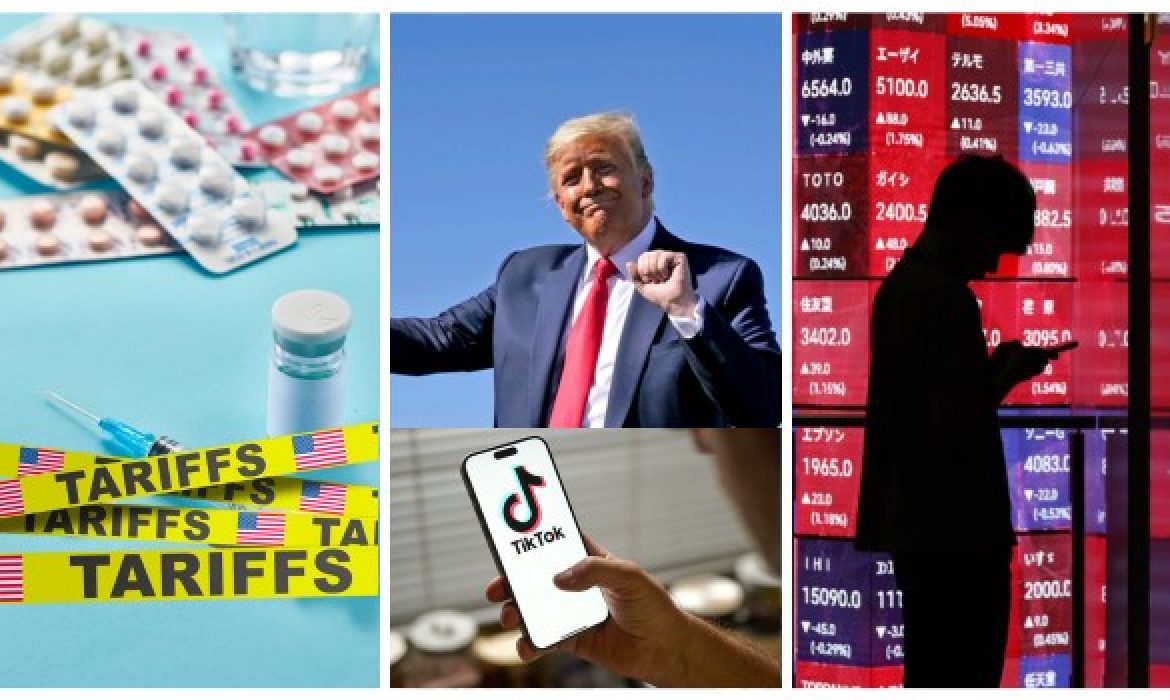
- U.S. to impose 100% tariffs on branded pharmaceuticals from Oct. 1: Pressures global supply chains and drugmakers reliant on overseas production.
- Trump approves $14B TikTok U.S. deal: Oracle and investors take control while ByteDance’s stake falls below 20%.
- Washington to enforce 25% tariffs on heavy truck imports: Expands trade measures to protect domestic manufacturers.
- Asian pharma stocks dropped sharply: Japanese, Korean, and Hong Kong-listed firms lead declines after U.S. drug tariff announcement.
U.S. to Levy 100% Tariff on Branded Drugs to Spur Local Production
The U.S. will impose a 100% tariff on all branded and patented pharmaceuticals starting October 1, unless manufacturers are actively building plants domestically, in a bid to reshore drug production.
The move follows a Section 232 investigation into pharmaceuticals and adds to Trump’s broader tariff strategy targeting critical imports. With U.S. pharma imports at $213 billion in 2024, the measure risks raising drug costs and worsening shortages, while adding pressure to global supply chains. Companies with larger U.S. manufacturing footprints, such as Eli Lilly and AbbVie, may be better positioned than peers like Novartis and Roche to absorb the impact.
Trump Approves $14B TikTok U.S. Deal With Oracle-Led Investors
President Trump approved a deal to keep TikTok operating in the U.S., signing an executive order that establishes a new joint-venture company valued at $14 billion.
Under the terms, Oracle, Silver Lake, and Abu Dhabi’s MGX will hold about 45% of the U.S. entity, while ByteDance’s stake falls below 20%, pending Chinese government approval.
Oracle will manage security operations and cloud services, reinforcing U.S. oversight of the platform. The move averts a looming ban under national security laws but leaves uncertainties around regulatory approval in Beijing and the long-term valuation of TikTok’s U.S. business relative to ByteDance’s global assets.
U.S. Imposes 25% Tariffs on Heavy Truck Imports Starting Oct. 1
The U.S. will impose a 25% tariff on imported heavy trucks from October 1, expanding President Trump’s Section 232 tariff agenda aimed at bolstering domestic manufacturing.
Mexico, Canada, Japan, Germany, and Turkey—key suppliers of medium- and heavy-duty trucks—are likely to be most affected. Additional duties include 100% tariffs on branded drugs, 50% on kitchen cabinets, and 30% on upholstered furniture, signaling a broader escalation in trade barriers.
While U.S. heavy-truck production has rebounded since 2020, analysts caution that high input costs and lack of tariff offsets could limit the benefits to domestic manufacturers, potentially raising prices for buyers.
Asian Pharma Stocks Slide After U.S. Drug Tariff Announcement
Asian pharmaceutical stocks extended losses after Trump announced 100% tariffs on branded drugs effective October 1, adding pressure to an already volatile sector.
Japan’s Topix Pharma Index dropped 1.47%, with Daiichi Sankyo, Chugai, and Sumitomo Pharma leading declines, while South Korea’s Samsung Biologics and SK Bio Pharmaceuticals fell 1.7% and 3.7%. Hong Kong-listed Alibaba Health and JD Health also retreated.
Regional equity markets were mixed, with South Korea’s Kospi down over 2% and Hong Kong’s Hang Seng off 0.9%, while Japan’s Topix hit a fresh record on softer-than-expected Tokyo inflation data, underscoring diverging investor sentiment across Asia.
Conclusion
Global markets face renewed volatility as U.S. trade policy intensifies and sector-specific tariffs reshape supply chain risks. The 100% levy on branded pharmaceuticals and 25% duties on heavy trucks highlight Washington’s push to reshore production, though the measures raise concerns over higher costs and supply disruptions.
Meanwhile, Trump’s approval of a $14 billion TikTok deal underscores continued scrutiny of Chinese-linked technology assets. In Asia, pharma stocks retreated on tariff fears, while broader equity moves reflected mixed signals from inflation and yields. Investors must navigate rising policy-driven headwinds while monitoring opportunities in sectors positioned for resilience or structural growth.
Investment Insights
- Tariffs on branded drugs and heavy trucks increase cost pressures: Investors should reassess exposure to supply chains reliant on imports.
- The TikTok deal highlights U.S. scrutiny of Chinese tech assets: Reinforces the importance of monitoring regulatory risk in cross-border investments.
- Domestic manufacturers may see short-term support: Protectionist policies could offer a boost, though input costs and supply disruptions may offset gains.
- Asia’s pharma sector weakness underscores tariff spillover risks: Diverging inflation trends in Japan suggest selective opportunities in regional equities.
Economic Calendar
| Date | Event | Why It Matters |
|---|---|---|
| September 26, 2025 | U.S. PCE Price Index (August) | Fed’s preferred inflation gauge; key for shaping monetary policy expectations. |
| September 26, 2025 | U.S. Durable Goods Orders & New Home Sales | Measures investment and housing demand, key for growth outlook. |
| September 30, 2025 | U.S. Advance GDP & Chicago PMI | Snapshot of Q3 growth momentum and manufacturing activity. |
| October 2, 2025 | U.S. Initial Jobless Claims | Weekly labor market indicator, influencing Fed policy trajectory. |
| Early October 2025 | Eurozone Manufacturing & Services PMI | Key barometer of eurozone growth and business confidence, closely tracked by ECB. |
Disclaimer: This newsletter provides financial insights for informational purposes only. It does not constitute financial advice or recommendations for investment decisions.
Daily Synopsis of the New York market close – September 25, 2025
Date Issued – 25th September 2025
Courtesy of the Research Department at Balfour Capital Group
Key Points
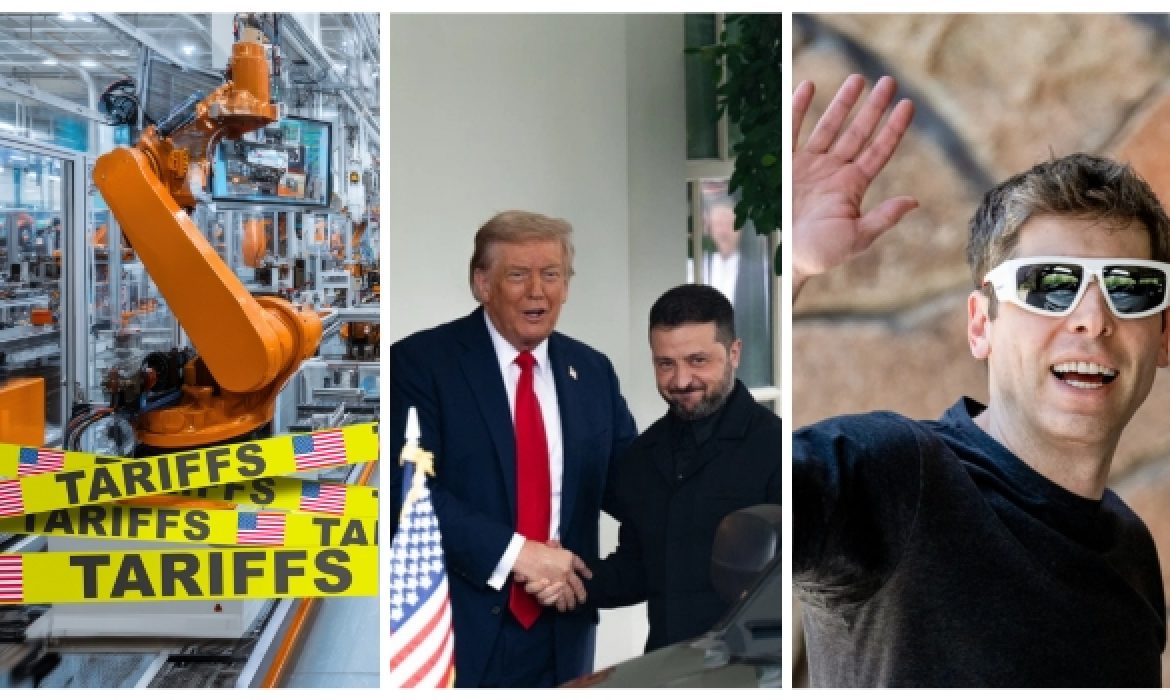
- U.S. Expands Section 232 Probes: The Biden administration is now investigating robotics and medical device imports, raising tariff risks for the auto industry, hospitals, and broader supply chains.
- Defense Stocks Rally Globally: European, Asian, and U.S. defense stocks surged after Trump backed Ukraine’s full territorial reclamation, fueling expectations of continued military support.
- Funds Flow Back to U.S. Equities: Global investors are returning to U.S. markets on AI optimism and anticipated Fed rate cuts, reversing months of outflows.
- Nvidia’s $100B OpenAI Deal: Nvidia’s investment in OpenAI reflects soaring AI infrastructure demand but raises sustainability concerns due to circular financing dynamics.
U.S. Probes Robotics and Medical Imports, Tariff Risks Rise
The U.S. administration has expanded its Section 232 national security probes to cover imports of robotics, industrial machinery, and medical devices, raising the prospect of fresh tariffs on a wide range of products from surgical masks to pacemakers.
The move highlights Washington’s push to reduce reliance on foreign supply chains, particularly from China and Mexico, which together supply over one-third of U.S. machinery imports. Potential levies could disrupt the auto sector, heavily dependent on imported industrial robots, and increase costs for hospitals and patients reliant on foreign-made medical equipment, intensifying pressure on healthcare budgets and taxpayer-funded programs.
Defense Stocks Rally on Trump’s Support for Ukraine Victory
Global defense stocks rallied after President Trump signaled that Ukraine could regain all occupied territory with NATO and EU support, marking a sharp shift from earlier calls for territorial concessions.
European names led gains, with Renk up 6.5%, Hensoldt nearly 6%, and Leonardo and Saab advancing over 3.5%. South Korean defense firms also rose 2–5%, while U.S. peers Lockheed Martin, RTX, and Northrop Grumman gained more than 1%. The sector’s outperformance reflects renewed expectations of sustained military support for Kyiv and heightened security commitments across NATO, reinforcing investor focus on defense as a structural growth theme amid ongoing conflict.
Global Investors Return to U.S. Assets on AI and Fed Cuts
Global investors are returning to U.S. assets after months of outflows, driven by optimism over Fed rate cuts and sustained AI momentum. U.S. equities gained 7% last quarter, outpacing European benchmarks, while fund inflows into U.S. stocks reached a year-to-date high of $58 billion last week.
The reversal follows record selling earlier this year amid tariff concerns, underscoring Wall Street’s resilience. Small caps are attracting renewed interest as beneficiaries of lower rates, while Treasuries also regained favor with yields easing. Still, some managers caution that AI-driven gains echo the late-1990s tech bubble, warning of medium-term valuation risks.
Nvidia’s $100B OpenAI Deal Raises Sustainability Questions
Nvidia’s up to $100 billion investment in OpenAI will largely be recycled into leasing Nvidia’s own GPUs, intertwining equity funding with revenue generation. The structure allows OpenAI to spread costs over several years while Nvidia secures long-term demand for its chips, central to AI model training and deployment.
The arrangement underscores Nvidia’s dominance in AI infrastructure but has raised investor concerns about the circular nature of the deal and the sustainability of AI-driven growth. While partners like Oracle provide additional financing, the reliance on equity and debt to fund massive data center buildouts highlights risks in the capital-intensive AI ecosystem.
Conclusion
Markets are recalibrating as trade policy, geopolitical dynamics, and technology investment shape the near-term outlook. Washington’s expanded Section 232 probes highlight rising tariff risks across critical sectors, with potential implications for healthcare and manufacturing costs.
Defense equities outperformed on expectations of sustained NATO support for Ukraine, while global fund flows shifted back toward U.S. assets, driven by AI strength and easing rate expectations.
Nvidia’s landmark investment in OpenAI underscores structural demand for AI infrastructure but raises questions about sustainability. Investors face a landscape defined by tariff uncertainty, defense rearmament, and capital-intensive technology growth requiring careful portfolio positioning.
Investment Insights
- Monitor Exposure to Tariff-Sensitive Sectors: Heightened U.S. tariff risks call for monitoring exposure to autos, healthcare, and supply chains reliant on China and Mexico.
- Defense Equities Supported by Geopolitics: Defense equities remain supported by geopolitical commitments, offering potential for structural growth in Europe, Asia, and the U.S.
- AI-Driven U.S. Equity Resilience: Renewed U.S. equity inflows highlight resilience of AI-driven sectors, though valuations warrant selective positioning.
- Nvidia Deal Highlights Infrastructure Demand: Nvidia’s OpenAI deal reinforces long-term demand for AI infrastructure, but investors should remain cautious of circular financing risks.
Economic Calendar
| Date | Event | Why It Matters |
|---|---|---|
| September 25, 2025 | U.S. Initial Jobless Claims | Weekly snapshot of labor market strength, key for Fed policy expectations. |
| September 26, 2025 | U.S. Durable Goods Orders & Factory Orders | Measures business investment and demand for capital goods, influencing growth outlook. |
| September 29, 2025 | U.S. Personal Consumption Expenditure (PCE) Price Index | Fed’s preferred inflation gauge; pivotal for interest rate trajectory. |
| September 30, 2025 | U.S. Advance GDP & Chicago PMI | Provides Q3 growth snapshot and business activity momentum. |
| October 2, 2025 | U.S. Initial Jobless Claims | Continuation of labor market monitoring, important for gauging economic resilience. |
| Early October 2025 | Eurozone Manufacturing & Services PMI | Key barometer of Eurozone growth momentum and ECB policy outlook. |
Disclaimer: This newsletter provides financial insights for informational purposes only. It does not constitute financial advice or recommendations for investment decisions.
Daily Synopsis of the New York market close – September 24, 2025
Date Issued – 24th September 2025
Courtesy of the Research Department at Balfour Capital Group
Key Points
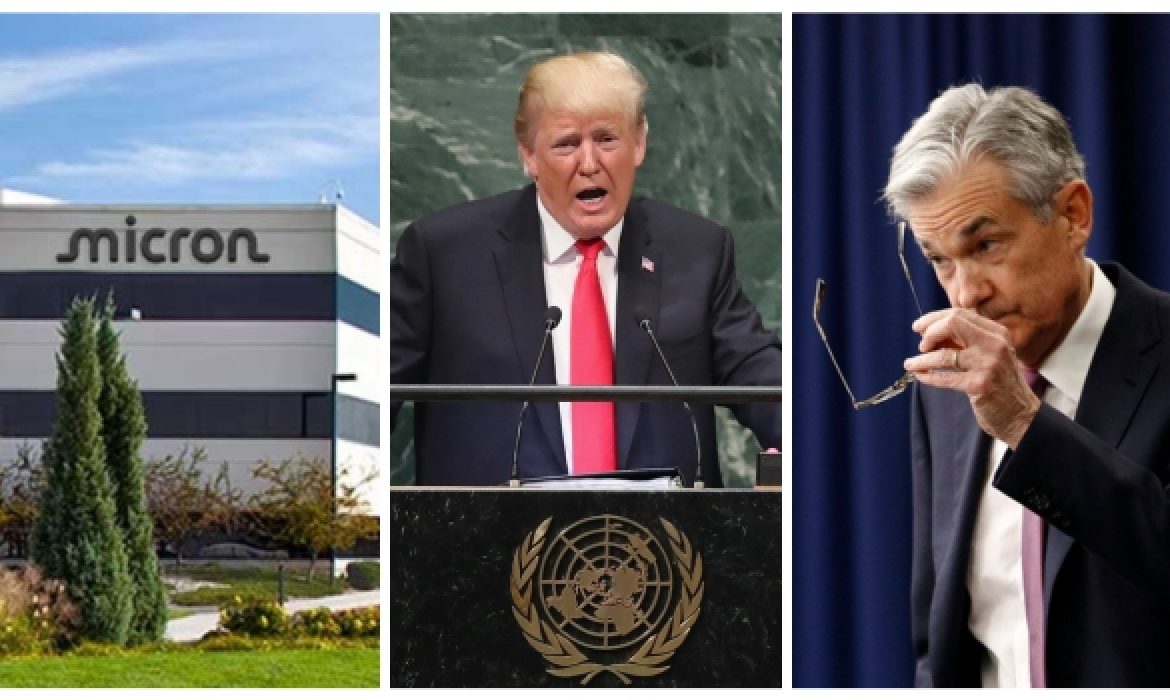
- Trump’s UN Speech Raises Tariff Risks: Trump’s UN address introduced the possibility of new U.S. tariffs on Russia, increasing pressure on European economies dependent on Russian energy.
- Powell Flags Valuation Concerns: Fed Chair Jerome Powell’s warning on elevated equity valuations weighed on European markets, leading to lower openings across major indexes.
- Asia Follows Wall Street Lower: Asian equities declined in response to Wall Street losses and valuation concerns, compounded by stronger-than-expected Australian CPI data.
- Micron Delivers Strong Earnings: Micron’s earnings beat and AI-driven sales outlook boosted investor confidence in the semiconductor sector, despite data center weakness.
Trump Warns of Tariffs on Russia, Rejects Climate Policies in UN Address
Trump’s address to the UN General Assembly sharpened geopolitical tensions, as he threatened new tariffs on Russia if Moscow does not move toward ending the war in Ukraine and pressed European nations to align with U.S. measures. His rejection of climate policies and emphasis on restricting migration signaled a policy shift back toward fossil fuels and tighter borders, underscoring risks for global coordination on energy and humanitarian frameworks. Markets are watching for potential trade disruptions if tariffs extend to nations dealing with Russia, particularly energy-reliant European economies, while uncertainty over U.S. foreign policy adds to geopolitical risk premia.European Stocks Dip as Powell Flags Equity Valuations
European equities are set to open lower after Fed Chair Jerome Powell warned that asset prices, including stocks, appear “fairly highly valued,” signaling caution on stretched valuations. Futures point to modest declines, with the FTSE 100 down 0.2%, Germany’s DAX off 0.3%, and France’s CAC 40 lower by 0.4%. The comments weighed on sentiment across Asia and left U.S. futures flat, underscoring investor sensitivity to central bank signals on market froth. European traders are also awaiting Germany’s Ifo Business Climate data and Swiss sentiment readings for further direction, while geopolitical uncertainty around Ukraine remains in focus.Asia Markets Weaken Following Fed Valuation Concerns
Asia-Pacific equities tracked Wall Street lower after Fed Chair Jerome Powell warned that U.S. stocks appear “fairly highly valued” and signaled uncertainty around the path of rate cuts. Japan’s Nikkei 225 slipped 0.33%, Australia’s ASX 200 lost 0.61%, and South Korea’s Kospi eased 0.11%, though defense names outperformed on expectations of continued NATO demand. Hong Kong’s Hang Seng and China’s CSI 300 were flat as Alibaba gained over 6% on a $53 billion AI investment plan. Regional sentiment was also pressured by hotter-than-expected Australian CPI at 3% year-on-year, reinforcing caution on monetary policy.Micron Surges on Strong Earnings and AI-Driven Sales Growth
Micron posted stronger-than-expected quarterly earnings, with adjusted EPS at $3.03 versus $2.86 expected and revenue at $11.32 billion, up 46% year-on-year. Guidance for the current quarter came in at $12.5 billion, above the $11.94 billion consensus, signaling sustained momentum from AI-driven demand. Shares, which have nearly doubled in 2025, gained in extended trading as investors focused on surging sales of high-bandwidth memory critical for AI chips, which more than tripled to $4.54 billion. While data center sales fell 22% to $1.57 billion, Micron’s positioning as the only U.S.-based memory producer reinforces its leverage in the AI supply chain.Conclusion
Markets remain on edge as geopolitical risk and monetary policy signals dominate investor focus. Trump’s combative UN address raised prospects of fresh tariffs on Russia, adding uncertainty for European energy markets. Powell’s comments on elevated equity valuations triggered declines across Europe and Asia, underscoring sensitivity to central bank messaging. Meanwhile, Micron’s strong results highlighted ongoing AI-driven growth in semiconductors, even as broader markets questioned the sustainability of the AI rally. With inflation pressures persisting in Australia and key European data ahead, investors face a complex mix of geopolitical headwinds and sector-specific opportunities shaping near-term positioning.Investment Insights
- Tariff Risks on Russia: Rising tariff threats on Russia could disrupt European energy flows; monitor exposure to energy-reliant markets.
- Valuation Sensitivity: Fed caution on equity valuations suggests increased downside risk; defensive positioning may be prudent.
- Asia’s Inflation Trends: Asia’s inflation signals and market pullback highlight the need to track central bank policy divergence.
- Semiconductor Momentum: Strong AI-driven semiconductor demand reinforces structural growth, favoring selective exposure to memory and chipmakers.
Economic Calendar
| Date | Event | Why It Matters |
|---|---|---|
| September 24, 2025 | Germany Ifo Business Climate | Key sentiment gauge for Europe, influencing eurozone growth and ECB expectations. |
| September 24, 2025 | Switzerland Economic Sentiment Index | Signals Swiss economic outlook and regional spillover effects. |
| September 26, 2025 | U.S. Durable Goods Orders & New Home Sales | Tests U.S. growth resilience and business investment trends. |
| September 29, 2025 | U.S. Personal Consumption Expenditure (PCE) Price Index | Core inflation measure closely watched by the Fed for policy direction. |
| September 30, 2025 | U.S. Advance GDP & Chicago PMI | Snapshot of Q3 economic growth and business activity momentum. |
Disclaimer: This newsletter provides financial insights for informational purposes only. It does not constitute financial advice or recommendations for investment decisions.

Daily Synopsis of the New York market close – September 23, 2025
Date Issued – 23rd September 2025
Courtesy of the Research Department at Balfour Capital Group
Key Points
- India’s $18B Semiconductor Program: India launches a $18B semiconductor program to reduce chip import reliance, though experts warn structural and talent gaps could slow progress.
- Trump’s H-1B Visa Fee: Trump’s $100K H-1B visa fee triggers uncertainty among Chinese professionals and employers, raising risks for U.S. tech and finance labor pipelines.
- Nvidia-OpenAI Partnership: Nvidia pledges up to $100B in OpenAI to expand AI data centers, boosting its market cap near $4.5T and reinforcing its dominance in AI chips.
- Asian Equities Mixed: Asian equities trade mixed as China tech stocks retreat, U.S. rate caution intensifies, and Trump’s new policies pressure Indian outsourcing and pharma.
India’s $18B Semiconductor Push Faces Steep Challenges
India has unveiled an ambitious $18.2 billion plan to build a domestic semiconductor ecosystem, aiming to reduce import dependence, secure supply for strategic sectors, and capture market share as global electronics production shifts away from China.
Ten projects across six states have been approved, including two fabrication plants and multiple testing and packaging facilities, led by Tata Electronics’ $11 billion fab in Gujarat. While government incentives and global partnerships have boosted momentum, experts caution that India lacks the depth of infrastructure, supply chain, and IP frameworks required to compete at the cutting edge, making execution the critical challenge.
Trump’s $100K H-1B Fee Stirs Anxiety Among Chinese Professionals
The Trump administration’s surprise $100,000 fee on new H-1B visa petitions has rattled Chinese professionals in the U.S. and raised fresh concerns for companies heavily reliant on skilled foreign workers.
While the White House later clarified the surcharge is a one-time cost applying only to new applicants, the announcement triggered widespread disruption, with some workers canceling travel plans amid uncertainty. Immigration attorneys warn the steep fee will likely push firms to limit sponsorship to senior or specialized roles, potentially shifting jobs offshore. For tech giants like Amazon and Microsoft, which are among the largest H-1B employers, the policy represents a costly adjustment.
Nvidia Commits $100B to OpenAI in Landmark AI Infrastructure Deal
Nvidia will invest up to $100 billion in OpenAI to support the AI lab’s vast data center buildout, underscoring the scale of infrastructure needed to power next-generation models.
The project, requiring 10 gigawatts of capacity — equal to 4–5 million GPUs — mirrors Nvidia’s annual shipment volume and highlights its dominance in the AI hardware market. Nvidia shares surged nearly 4%, adding $170 billion in market value, as the deal cements its role as OpenAI’s preferred supplier. The phased investment, starting with $10 billion, reflects the deepening integration between the two firms at the center of the global AI boom.
Asia Stocks Mixed as China Tech Slips, U.S. Rate Signals Weigh
Asian equities traded cautiously on Tuesday as mixed signals on U.S. interest rates and fresh regulatory headlines from Washington curbed risk appetite.
China’s CSI 300 fell 1% and Hong Kong’s Hang Seng dropped 1% as profit-taking hit major tech names, with Baidu sliding 7% after recent highs. Indian IT stocks including Infosys and TCS extended losses following Trump’s steep H-1B visa fee, fueling concerns over the $300 billion outsourcing industry. While South Korea’s KOSPI and Australia’s ASX 200 advanced on stronger tech and commodity support, risk aversion remained evident with gold reaching record highs ahead of key U.S. inflation data.
Conclusion
Global markets remain in a delicate balance, shaped by strategic industrial bets, evolving U.S. policy, and the accelerating race in artificial intelligence.
India’s ambitious semiconductor push underscores a long-term bid for technological sovereignty, while Trump’s $100K H-1B visa fee injects fresh uncertainty into global talent flows.
Nvidia’s landmark investment in OpenAI highlights the scale of capital being deployed into AI infrastructure, reinforcing its market leadership.
Meanwhile, Asian equities reflect cautious sentiment as rate policy signals and political rhetoric weigh on momentum. For investors, resilience and adaptability remain essential as technology, trade, and policy shifts redefine market dynamics.
Investment Insights
- Semiconductors: India’s $18B chip push creates long-term opportunities in supply chain infrastructure and OSAT (outsourced assembly and testing), but near-term execution risks remain high.
- Talent & Labor: Trump’s $100K H-1B visa fee could tighten U.S. tech labor markets, raising costs for firms reliant on foreign talent while boosting incentives to offshore more roles.
- Artificial Intelligence: Nvidia’s $100B commitment to OpenAI cements its dominance in AI infrastructure, reinforcing demand visibility and ecosystem lock-in for years ahead.
- Asian Equities: Heightened policy uncertainty and sector-specific headwinds in China signal near-term volatility, favoring selective exposure to resilient tech and healthcare leaders.
Economic Calendar
| Date | Event | Why It Matters |
|---|---|---|
| September 23, 2025 | HCOB France & Germany Manufacturing/Services PMI | Early barometer of Eurozone business sentiment and potential monetary policy cues. |
| September 30, 2025 | S&P Case-Shiller U.S. Home Price Index | Insight into U.S. housing market trends and inflation pressures. |
| October 15, 2025 | U.S. Consumer Price Index (CPI) Release | Key inflation metric that heavily influences Fed rate expectations. |
| October 15, 2025 | U.S. Real Earnings Report (August) | Measures wage growth relative to inflation, essential for assessing consumer purchasing power. |
Disclaimer: This newsletter provides financial insights for informational purposes only. It does not constitute financial advice or recommendations for investment decisions.