

Daily Synopsis of the New York market close – April 2, 2025
Date Issued – 2nd April 2025
Preview
Markets remain on edge as U.S. tariff uncertainty looms, pressuring Asian stocks and commodities like oil, which steadied below $75 per barrel ahead of President Trump’s announcement. Tesla’s Q1 delivery figures, expected to decline sharply to 390,000 units, highlight challenges from CEO Elon Musk’s political controversies and growing competition, particularly from China’s BYD. Meanwhile, Johnson & Johnson shares plunged 7.6% after a judge rejected its $8.9 billion talc settlement plan, raising legal risks. Schroders faces strategic crossroads as shifting investor preferences toward passive and private funds weigh on its traditional active management model, prompting a £150m cost-cutting overhaul. Investors should brace for heightened volatility while seeking opportunities in resilient sectors and emerging market leaders.
Markets on Edge as Tariff Uncertainty Looms
Asian stocks traded cautiously on Wednesday amid heightened nerves over U.S. President Donald Trump’s impending tariff announcement, expected to intensify global trade tensions. While Japan’s Nikkei managed a 0.25% gain after earlier losses, South Korea’s benchmark fell 0.6%, and Hong Kong’s Hang Seng remained flat. European futures pointed to a subdued open, while Wall Street showed mixed results overnight, with the Dow slipping slightly and the Nasdaq rising. Gold, a safe-haven asset, hovered near record highs at $3,116.96 per ounce, reflecting investor unease. U.S. economic data added to the gloom, with manufacturing contracting in March, inflation pressures rising, and job openings declining. Meanwhile, Treasury yields fell, signaling a cautious stance in bond markets.
Investment Insight: With escalating tariff risks and signs of economic strain, investors should brace for prolonged volatility. Safe-haven assets like gold remain attractive amid uncertainty, but a focus on high-quality equities in less trade-sensitive sectors may offer resilience. Monitoring policy developments and second-half growth projections will be critical for navigating the shifting landscape.
Oil Rally Stalls Ahead of US Tariff Announcement
Oil prices steadied on Wednesday as traders awaited U.S. President Donald Trump’s highly anticipated tariff measures, which could have far-reaching economic implications. Brent crude traded below $75 per barrel, while West Texas Intermediate remained just above $71. Market sentiment has turned cautious after last month’s robust rally, as concerns grow over potential global demand disruptions from new tariffs. Adding to the uncertainty, U.S. crude inventories surged by 6 million barrels last week, raising fears of a supply glut amid ongoing geopolitical tensions involving Russia and Iran. With OPEC and its allies increasing production this month, traders are scaling back risk exposure ahead of Trump’s announcement.
Investment Insight: Oil markets face conflicting forces, with rising inventories and trade uncertainties weighing on prices, while geopolitical risks and production constraints could limit downside risks. Investors should focus on energy companies with strong balance sheets and diversified revenue streams to weather potential volatility. Additionally, a cautious approach to crude futures may be prudent until clearer demand signals emerge following U.S. tariff decisions.

Tesla’s Q1 Deliveries in Focus Amid Mounting Headwinds
Tesla is set to report its first-quarter delivery figures on Wednesday, with analysts forecasting a significant decline to 390,000 units, down from an earlier estimate of 460,000. The EV giant faces headwinds from CEO Elon Musk’s political controversies, intensified competition from Chinese automakers, and slowing demand in key markets. European sales fell 49% year-on-year, while deliveries in China dropped 49% in February. Despite stronger U.S. sales and limited exposure to Trump’s proposed auto tariffs, Tesla’s share price has plunged 36% this year, erasing $460 billion in market value. Analysts remain cautious, citing BYD’s rapid growth and technological advancements as key challenges to Tesla’s market dominance.
Investment Insight: Tesla’s declining deliveries and intensifying competition signal a challenging road ahead for the EV leader. Investors should closely monitor Tesla’s ability to innovate and maintain its market share, particularly in China and Europe. Diversifying exposure to emerging EV market leaders, such as BYD, may provide a strategic hedge against Tesla’s volatility.
Market price: Tesla Inc (TSLA): USD 268.46
Johnson & Johnson Plunges After Judge Rejects Talc Settlement
Johnson & Johnson (JNJ) shares tumbled 7.6% on Tuesday, leading S&P 500 decliners, after a judge rejected the company’s proposed settlement of thousands of talc-related liability claims. The failed $8.9 billion settlement, which relied on a “prepackaged bankruptcy” plan for a subsidiary, marks J&J’s third unsuccessful attempt to resolve the litigation. The stock closed at $153.25, slipping below key technical levels, including the 50- and 200-week moving averages. Despite the sharp drop, J&J shares remain up 6% year-to-date, outperforming the S&P 500’s 4% decline. Investors now turn to critical support levels around $147 and $137, with resistance at $167 and $180.
Investment Insight: Johnson & Johnson’s legal setbacks compound downside risks, as the stock remains under pressure within a descending channel. Investors should monitor support levels for potential entry points but maintain caution as further legal challenges could weigh on sentiment. For long-term investors, J&J’s robust dividend yield and defensive healthcare positioning may provide a degree of resilience, but short-term volatility is likely as litigation uncertainties persist.
Market price: Johnson & Johnson (JNJ): USD 153.25
Schroders Faces Strategic Crossroads Amid Industry Shift
Historic fund manager Schroders is grappling with declining relevance as the investment landscape shifts toward low-cost passive funds and private capital. Despite growing assets under management to £780bn, the firm’s traditional active stock-picking model is under pressure, with outflows in public markets and slowing growth in private capital. The firm’s share price remains 45% below its 2021 peak, eroding the wealth of the Schroder family, which owns 44% of the business. CEO Richard Oldfield has unveiled a £150m cost-cutting plan, signaling a pivot toward efficiency and rethinking its private capital strategy. Yet questions linger over whether Schroders can succeed in both public and private markets or if a more radical restructuring, such as pivoting fully to wealth management, will be necessary.
Investment Insight: Schroders’ struggle underscores the challenges facing traditional asset managers as market dynamics evolve. For investors, the firm’s success hinges on its ability to drive inflows in private capital and streamline operations. While the wealth management arm, anchored by Cazenove Capital, offers a potential growth path, uncertainty remains. Investors may consider Schroders a high-risk, long-term turnaround play, while exploring opportunities in more agile competitors in the passive fund and private capital spaces.
Conclusion
Global markets are grappling with heightened uncertainty as geopolitical risks, legal challenges, and evolving industry dynamics weigh on sentiment. From Tesla’s delivery struggles and Johnson & Johnson’s legal setbacks to Schroders’ strategic pivot, investors face a complex landscape requiring careful navigation. Safe-haven assets like gold and defensive sectors offer resilience, while opportunities in private capital and emerging market leaders could provide growth. As tariff announcements loom, the focus shifts to policy developments and economic indicators for clarity. Staying diversified and strategically positioned will be key to weathering the volatility and capitalizing on opportunities in an increasingly uncertain environment.
Upcoming Dates to Watch
- April 3rd, 2025: Initial Jobless Claims, US Trade deficit
- April 4th, 2025: US Employment Report, Fed Chair Jerome Powell to Speak
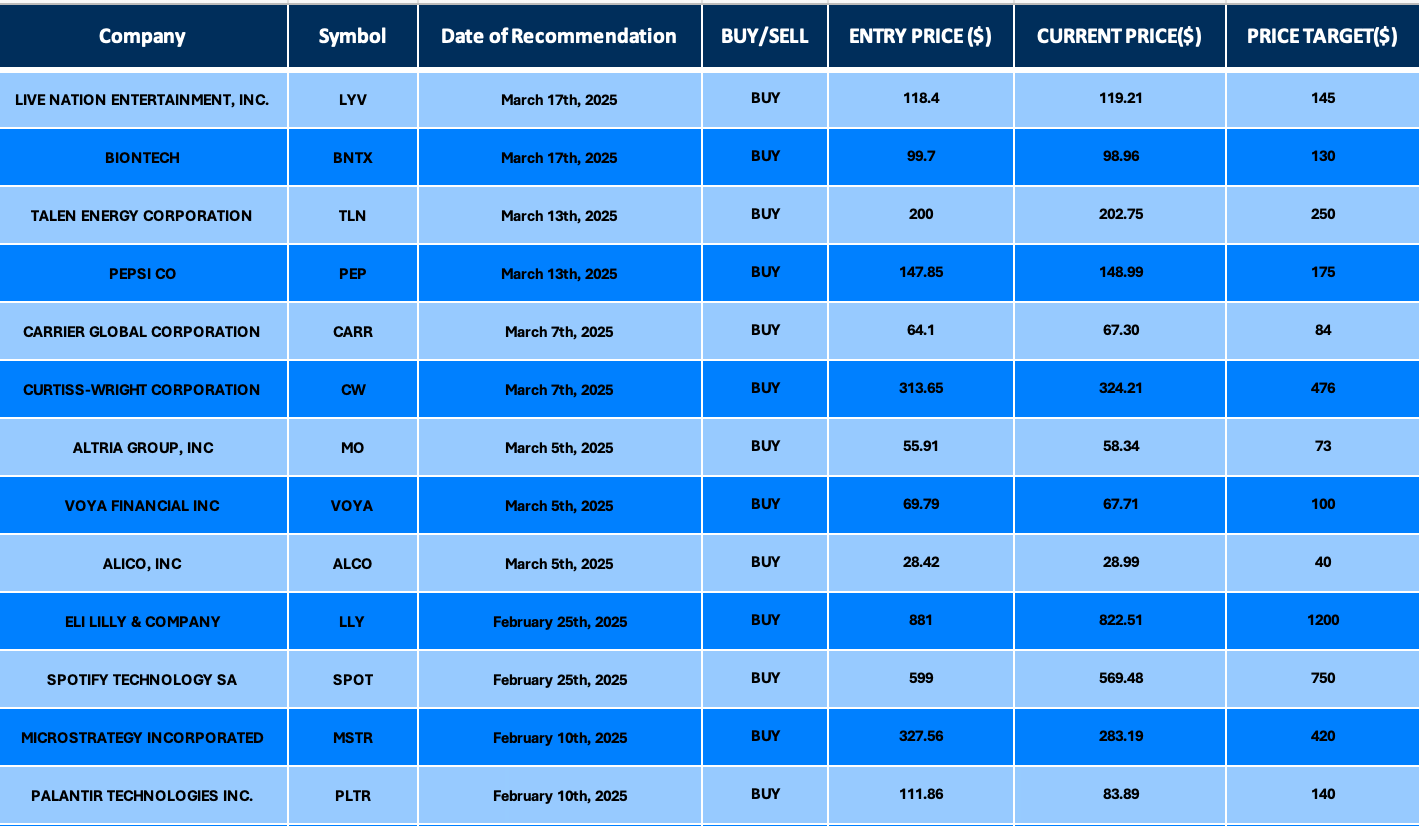
Find below some of our Buy/Sell Recommendations. Balfour Capital Group is a distinguished global boutique investment management firm with $350 million AUM and over 1000 Clients.
Disclaimer: This post provides financial insights for informational purposes only. It does not constitute financial advice or recommendations for investment decisions.
Daily Synopsis of the New York market close – April 1, 2025
Date Issued – 1st April 2025
Preview
Global markets remain volatile as tariff uncertainties and weakening economic growth weigh on sentiment. Asian markets rebounded Tuesday, led by a 1.8% gain in South Korea’s Kospi, though fears over U.S. “Liberation Day” tariffs loom. European stocks saw their first monthly decline of 2025, with the Stoxx 600 down 3.8% in March amid sharp losses in luxury goods and autos. The S&P 500 ended its worst quarter in three years, dropping 5.75% in March, as Big Tech faltered and recession risks climbed to 35%, according to Goldman Sachs. Meanwhile, LG Energy Solution plans a $2 billion acquisition of a Michigan EV battery plant, signaling confidence in U.S. battery demand despite regulatory uncertainties. Defensive strategies, diversification, and monitoring policy developments remain critical for navigating the challenging environment.
Asian Markets Rebound Amid Wall Street’s Gains, Tariff Fears Loom
Asian stocks climbed on Tuesday, buoyed by Wall Street’s overnight recovery, though uncertainty surrounding the U.S.’s impending “Liberation Day” tariffs kept markets on edge. South Korea’s Kospi led regional gains, up 1.8%, followed by Taiwan’s Taiex, which surged 2.6%. Japan’s Nikkei eked out a 0.1% gain despite worsening business sentiment among manufacturers. Meanwhile, gold prices hit $3,172.80 per ounce as investors sought safety amid inflation and recession concerns. Analysts anticipate President Trump’s reciprocal tariffs could average 15%, with Goldman Sachs raising the probability of a U.S. recession to 35%. U.S. crude oil edged higher to $71.65 per barrel, while the dollar weakened against the yen.
Investment Insight
Volatility in global markets underscores the importance of diversification. Investors should watch for tariff developments, as harsher-than-expected measures could dampen growth and stoke inflation fears. Defensive assets like gold and consumer staples may offer stability, while resilient sectors such as energy and financials could benefit from rising commodity prices and elevated rates. However, cautious positioning remains key as recession risks climb.
Chip Grants at a Crossroads as US Pushes for Bigger Investments
Commerce Secretary Howard Lutnick is raising the stakes for semiconductor companies seeking federal support under the 2022 Chips Act by urging them to significantly expand their U.S. investments. Lutnick’s efforts mirror Taiwan Semiconductor Manufacturing Co.’s (TSMC) recent commitment to $165 billion in U.S. projects. While the Chips Act initially allocated $52 billion in subsidies, Lutnick is leveraging the program to secure tens of billions more in private-sector commitments without increasing federal spending. However, delays in subsidy disbursement and uncertainty surrounding future grants are causing unease among manufacturers like Wolfspeed (WOLF) and Micron (MU). Meanwhile, a proposed expansion of the program’s 25% tax credit could offer broader incentives but requires congressional approval.
Investment Insight
As the U.S. semiconductor policy evolves, investors should monitor companies with significant exposure to Chips Act funding, such as TSMC, Intel (INTC), and Texas Instruments (TXN). Delays in grant payments may pose short-term headwinds, but expanded tax credits could incentivize further domestic investment, creating long-term growth opportunities. The geopolitical emphasis on reshoring chip production underscores the sector’s strategic relevance, making leading-edge manufacturers a compelling long-term play amidst potential market volatility.
S&P 500 Suffers Worst Quarter in 3 Years as Tariff Uncertainty and Weak Growth Persist
The S&P 500 closed its first quarter of 2025 down 5.75% in March, marking its worst three-month performance in three years, driven by mounting risks including President Trump’s looming “Liberation Day” tariffs. Tariff fears have compounded existing challenges such as declining consumer spending, weakening economic growth, and inflationary pressures, leaving investors cautious. Big Tech, once a market leader, has seen a stark pullback, with the “Magnificent Seven” posting their worst collective performance in over two years. Analysts at Goldman Sachs now forecast U.S. economic growth at a mere 0.2% annualized rate for Q1, alongside a 35% chance of a recession within the next year. As consumer and CEO confidence plummet, strategists are bracing for continued choppiness in equity markets and a potential bottom later this summer.
Investment Insight
Investors should approach the current market with caution, prioritizing defensive strategies and high-quality assets. With uncertainty surrounding tariffs and economic growth, sectors such as consumer staples, healthcare, and utilities may offer relative stability. Meanwhile, equity valuations, while off their peaks, remain vulnerable to earnings downgrades amid weakening business and consumer sentiment. For long-term positioning, Big Tech and AI-driven companies could regain footing once macroeconomic conditions stabilize, but near-term risks warrant a wait-and-see approach. Patience and diversification remain key as markets navigate a high-risk environment.
European Markets Slide as US Tariff Threats Rattle Investors
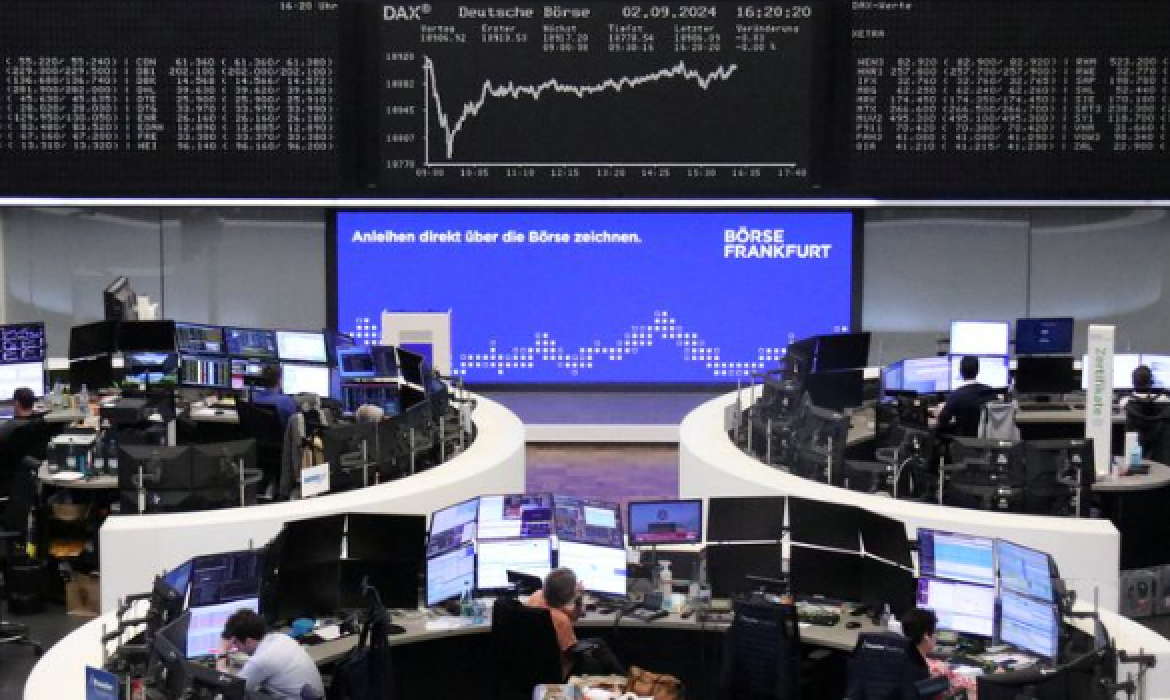
European stock markets suffered their first monthly decline of 2025, with the Stoxx 600 falling 3.8% in March, as investors braced for U.S. President Trump’s “Liberation Day” tariffs. Germany’s DAX dropped 2.38%, while France’s CAC 40 slid 4.09%, weighed down by sharp losses in consumer cyclicals, autos, and healthcare. Luxury brands like LVMH and Hermès tumbled 18% and 12%, respectively, while automakers such as BMW and Stellantis fell 12% and 17%. U.S. tariff plans, including a 25% levy on automobiles and potential duties on medical products and semiconductors, raised fears of a broader economic slowdown. Meanwhile, the euro strengthened 4.25% against the dollar in March, supported by optimism over EU fiscal initiatives, while U.S. Treasury yields remained flat amid recession concerns.
Investment Insight
The escalating U.S.-EU trade tensions warrant caution for investors exposed to European export-heavy sectors like luxury goods, autos, and healthcare. While the euro’s rally signals relative strength in the European economy, higher bond yields and looming tariffs could weigh further on equities. Defensive sectors such as utilities and staples may offer stability in the near term, while opportunities in U.S. Treasuries could appeal to risk-averse investors seeking safe-haven assets amid global volatility. Diversification across geographies and sectors remains critical as trade and inflation risks persist.

LG Energy Solution to Acquire Michigan Battery Venture for $2 Billion
South Korea’s LG Energy Solution announced plans to acquire the Michigan EV battery plant assets of its joint venture with General Motors for $2 billion, with the deal expected to close by May 31, pending due diligence. This move follows GM’s December announcement to exit the plant amid uncertainty surrounding EV tax credits and future battery production under the Trump administration. Despite the shift, LG and GM continue to collaborate on battery ventures in Ohio and Tennessee, while Toyota plans to transfer its battery orders to the Michigan facility.
Investment Insight
The acquisition underscores LG Energy Solution’s commitment to expanding its U.S. battery footprint despite policy uncertainty. For investors, this signals continued growth in EV battery demand, particularly as automakers like Toyota adapt their supply chains. However, GM’s reduced EV ambitions highlight risks tied to shifting regulatory frameworks. Investors should monitor how policy developments and tax incentives impact the broader EV supply chain, as well as opportunities in battery technology innovators.
Market price: LG Energy Solution Ltd (KRX: 373220): KRW 328,000
Conclusion
As global markets face heightened uncertainty, investors are navigating a complex landscape shaped by recession risks, tariff fears, and shifting economic conditions. The U.S. “Liberation Day” tariffs remain a pivotal factor, with potential ripple effects across equities, trade, and consumer sentiment. While defensive assets like gold and utilities offer stability, growth-oriented sectors face near-term headwinds. Corporate actions, such as LG Energy Solution’s strategic acquisition, highlight opportunities in resilient industries like EV batteries. Diversification and cautious positioning are essential as markets remain volatile. Staying attuned to policy shifts and macroeconomic developments will be key to identifying long-term investment opportunities.
Upcoming Dates to Watch
- April 1st, 2025: S&P Manufacturing PMI, ISM Manufacturing PMI
- April 3rd, 2025: Initial Jobless Claims, US Trade Deficit
- April 4th, 2025: US Employment Report, Fed Chair Jerome Powell to Speak
Find below some of our Buy/Sell Recommendations. Balfour Capital Group is a distinguished global boutique investment management firm with $350 million AUM and over 1000 Clients.
Disclaimer: This post provides financial insights for informational purposes only. It does not constitute financial advice or recommendations for investment decisions.
Daily Synopsis of the New York market close – March 31, 2025
Date Issued – 31st March 2025
Preview
Global markets extended their slide as trade tensions escalated, with Asian equities leading declines and safe-haven demand driving gold to a record $3,115 per ounce. Oil prices fluctuated amid uncertainty over potential U.S. sanctions on Russian crude, while China’s major banks announced a $72 billion recapitalization to support lending and economic recovery. TSMC reaffirmed its commitment to Taiwan with a new advanced chip fab, even as it expands globally with a $100 billion U.S. investment. Investors remain defensive, favoring gold, Treasuries, and selective opportunities in Europe and China, as geopolitical and macro uncertainties continue to rattle sentiment.
Global Markets Slide as Trade War Risks Intensify
Global equities extended their selloff for a fourth consecutive day amid escalating concerns over US tariffs and their economic impact. Asian markets led the decline, with Japan’s Nikkei-225 tumbling to a six-month low, while US and European equity futures also pointed downward. Safe-haven assets rallied, with gold hitting a record $3,115.97 per ounce and US Treasury yields falling. Investors are de-risking portfolios ahead of President Trump’s proposed “reciprocal tariffs” set to be unveiled this week, which analysts fear could weigh heavily on global growth. Meanwhile, oil prices fell on speculation about potential secondary tariffs on Russian crude exports. Amid the uncertainty, Goldman Sachs predicts three rate cuts from both the Federal Reserve and the ECB this year, as trade tensions continue to erode economic momentum.
Investment Insight
With heightened volatility and escalating trade tensions, this remains a defensive market. Investors may consider increasing allocations to safe-haven assets like gold and US Treasuries, which are benefiting from risk-off sentiment. Additionally, opportunities in Europe, where fiscal expansion potential exists, and China, which reported expanding factory activity, offer diversification amid US-centric uncertainties. Staying nimble and hedging against downside risk will be key in navigating these turbulent markets.
China’s Big Banks Raise $72 Billion to Support Economic Recovery
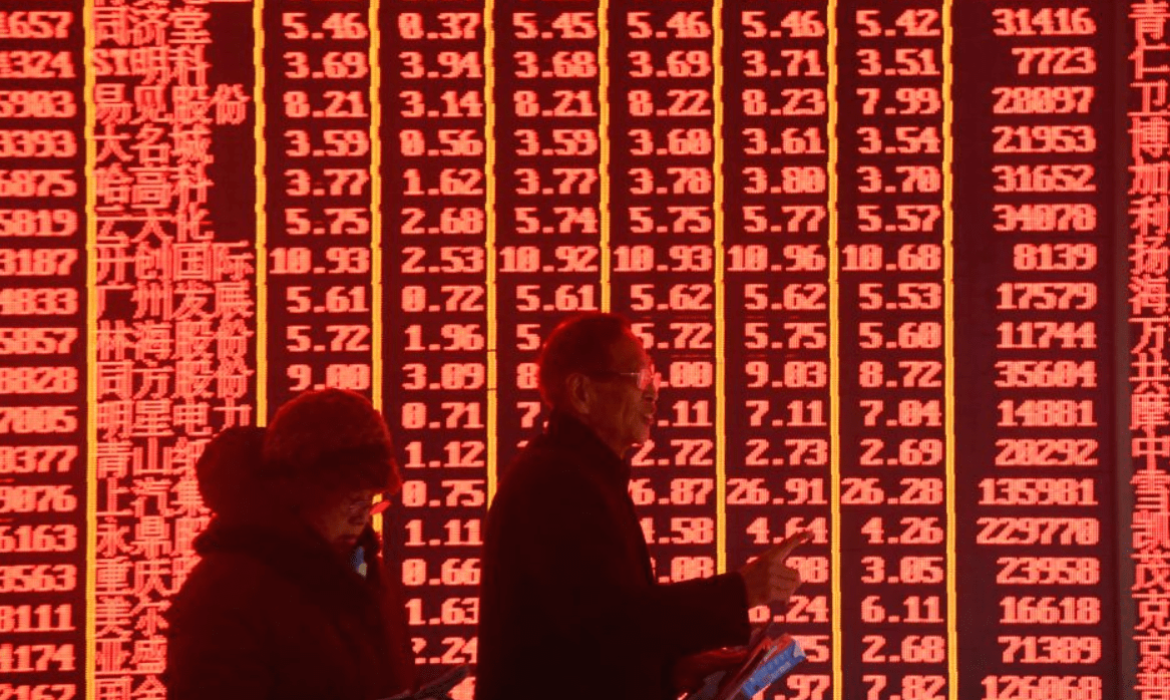
China’s four largest state-owned banks announced plans to raise a combined 520 billion yuan ($71.6 billion) through private placements, with the Finance Ministry playing a key role as a major investor. The capital infusion aims to strengthen the banks’ core Tier-1 capital, enabling them to boost lending and support the real economy amid a slowdown. Bank of China, China Construction Bank, Bank of Communications, and Postal Savings Bank of China will each raise between 105 billion and 165 billion yuan, with the Finance Ministry set to become the controlling shareholder of Bank of Communications. Shares of these banks rose following the announcement, signaling investor confidence in Beijing’s efforts to shore up the financial sector. However, profitability pressures persist as slowing growth, a troubled property market, and potential interest rate reductions weigh on margins.
Investment Insight
China’s recapitalization of its major banks highlights Beijing’s commitment to stabilizing the economy, but the initiative underscores broader economic challenges. Investors should monitor how effectively these funds translate into increased lending and economic activity. While Chinese bank stocks may find short-term support from this move, long-term profitability remains uncertain amid structural headwinds. Diversifying exposure to sectors less tied to credit risk, such as technology or consumer staples, may offer a safer path for those looking to invest in China.
Oil Fluctuates as Markets React to Trump’s Russia Tariff Threats
Oil prices swung amid uncertainty over President Trump’s threat of secondary tariffs on Russian crude if President Putin does not agree to a Ukraine ceasefire. Brent crude held steady below $73 a barrel, while WTI hovered near $69. Trump’s mixed signals—expressing both anger at Putin and doubt that penalties will be necessary—added to market volatility. Russia’s role as a top global oil producer means any sanctions could disrupt crude flows, particularly to key buyers like China and India. Meanwhile, broader bearish sentiment persists as OPEC+ prepares to increase production and rising supply weighs on the market.
Investment Insight
Oil markets face heightened geopolitical risk, with potential sanctions on Russian crude adding an unpredictable layer of volatility. Investors should monitor developments closely, as any disruption to Russian oil flows could tighten global supply and boost prices in the near term. However, OPEC+ supply increases and demand concerns may cap gains, making this a market for selective, short-term plays rather than long-term bets. Diversifying energy exposure with a focus on natural gas or renewables could also mitigate risk.
TSMC Reaffirms Commitment to Taiwan with New Advanced Chip Fab
TSMC inaugurated a new fab in Kaohsiung, Taiwan, reaffirming its commitment to the island even as it advances global expansion plans, including a $100 billion investment in the U.S. The facility, set to begin volume production of 2-nanometer chips in the second half of 2025, will create 7,000 tech jobs and strengthen Taiwan’s position as a global semiconductor hub. While concerns linger about the impact of TSMC’s overseas investments on Taiwan’s economy, executives reiterated that the company’s “most important foundations” will stay on the island. Taiwan Premier Cho Jung-tai praised TSMC as a key pillar of the nation’s economy, often referred to as the “sacred mountain protecting the country.”
Investment Insight
TSMC’s dual strategy of domestic expansion and international diversification highlights its effort to balance geopolitical risks and supply chain resilience. Investors should view the company’s U.S. expansion as a move to solidify relationships with key customers like Apple and Nvidia while reducing exposure to Taiwan-specific risks. However, TSMC’s advanced domestic capabilities, such as its 2-nanometer production, ensure it retains technological leadership. The company remains a cornerstone of the global semiconductor industry, making it a strong long-term investment despite near-term geopolitical pressures.
Market price: Taiwan Semiconductor Manufacturing Co Ltd. (TPE: 2330): TWD 910.00
Gold Surges Past $3,100 as Trade Tensions Fuel Haven Demand
Gold surged to a record high, climbing as much as 0.9% to $3,115 per ounce, as escalating trade tensions and geopolitical uncertainty bolstered demand for safe-haven assets. The metal has gained 18% year-to-date, supported by central bank buying and strong inflows into bullion-backed ETFs. President Trump’s recent 25% tariff on auto imports and the anticipation of reciprocal tariffs this week have intensified risk-off sentiment, driving gold’s rally. Major banks, including Goldman Sachs, have raised their year-end price forecasts for gold, with Goldman now targeting $3,300 an ounce. Other precious metals, including silver and platinum, also advanced, while the Bloomberg Dollar Spot Index edged lower.
Investment Insight
Gold’s sustained rally underscores its value as a hedge against rising geopolitical and macroeconomic risks. With central bank demand remaining robust and interest rate cuts still on the table, the metal’s upward momentum appears durable. Investors seeking safe-haven exposure should consider adding gold to portfolios, either through physical holdings, ETFs, or mining stocks. However, with prices already at record highs, caution is warranted to avoid overexposure in the event of a pullback.
Conclusion
Global markets face heightened volatility as trade tensions, geopolitical risks, and economic uncertainties dominate investor sentiment. Safe-haven assets like gold and Treasuries are surging, while oil markets remain unpredictable amid potential sanctions on Russian crude. China’s major banks are boosting capital to support growth, and TSMC is balancing domestic expansion with global diversification. As central banks weigh rate cuts and fiscal policies evolve, investors are urged to stay defensive, focus on diversification, and monitor key developments closely. Maintaining flexibility and hedges will be essential as markets navigate a turbulent landscape shaped by macro and geopolitical challenges.
Upcoming Dates to Watch
- April 1st, 2025: S&P Manufacturing PMI, ISM Manufacturing PMI
- April 3rd, 2025: Initial Jobless Claims, US Trade Deficit
- April 4th, 2025: US Employment Report, Fed Chair Jerome Powell to Speak
Find below some of our Buy/Sell Recommendations. Balfour Capital Group is a distinguished global boutique investment management firm with $350 million AUM and over 1000 Clients.
Disclaimer: This post provides financial insights for informational purposes only. It does not constitute financial advice or recommendations for investment decisions.

Daily Synopsis of the New York market close – March 28, 2025
Date Issued – 28th March 2025
Preview
Global markets are under pressure as U.S. tariff concerns spark a third day of equity selloffs, with gold hitting a record $3,077.60 per ounce. The Bank of Japan may further scale back its bond purchases, potentially triggering volatility in Japan’s fixed-income markets. In South Korea, Hanwha Aerospace’s meteoric 3,100% rally underscores booming defense spending but raises governance concerns. Meanwhile, BlackRock’s Bitcoin ETP launch in Europe marks a milestone for institutional cryptocurrency adoption, though early inflows lag behind U.S. levels. In China, President Xi Jinping is urging foreign investment to revive the slowing economy, emphasizing market stability and long-term potential despite trade tensions and structural risks.
Global Markets Slide as Tariff Fears Mount, Gold Hits Record High
A third consecutive day of global equity selloffs rattled investors, with the MSCI World Index posting its longest losing streak in a month amid mounting concerns over upcoming US tariffs. President Trump’s April 2 announcement of “reciprocal tariffs,” following a 25% levy on foreign automobiles, has heightened fears of inflation and economic slowdown, prompting widespread de-risking. Gold surged to a record $3,077.60 per ounce, driven by demand for safe havens, while US Treasury yields steepened as investors priced in potential inflationary pressures. Asian equities faced their steepest drop in nearly a month, and cryptocurrencies also retreated. Meanwhile, the yen strengthened against the dollar as Tokyo inflation data bolstered expectations of gradual Bank of Japan rate hikes.
Investment Insight
Heightened tariff uncertainty underscores the importance of defensive positioning. Investors may consider focusing on companies with limited exposure to global trade disruptions and maintaining liquidity to capitalize on volatility-driven opportunities. Gold’s record-setting rally reflects its continued appeal as a hedge against economic and geopolitical risks, while rising Treasury yields signal inflation concerns that could weigh on equity valuations.
BOJ Eyes Cut to Super-Long Bond Purchases Amid Policy Normalization
The Bank of Japan (BOJ) is expected to signal further steps toward unwinding its decade-long stimulus program when it announces its second-quarter bond-buying plan on Monday. Analysts predict the central bank may begin tapering purchases of super-long government bonds with maturities of 10-25 years, a move that would align with its quantitative tightening (QT) program aimed at halving monthly bond purchases to 3 trillion yen by March 2026. The BOJ’s balance sheet holds roughly 600 trillion yen in Japanese government bonds (JGBs)—about half of the market and equivalent to Japan’s GDP. With long-term yields climbing to 15-year highs, the market is bracing for potential sell-offs in the super-long bond segment.
Investment Insight
The BOJ’s tapering of super-long bond purchases could trigger volatility in Japan’s fixed-income markets, particularly in the 10-25 year maturity zone. Investors holding JGBs should prepare for potential price declines and rising yields as the central bank reduces its footprint. Broader implications include upward pressure on borrowing costs and a steeper yield curve, which may favor financial sector equities while challenging highly leveraged firms. Diversified exposure to sectors less sensitive to rate hikes could help mitigate risks.
Hanwha Aerospace’s Meteoric Rise Tests Limits of Defense Boom
South Korea’s Hanwha Aerospace has surged over 3,100% in the past five years, emerging as the world’s best-performing defense stock amid rising global demand for conventional weapons. As geopolitical tensions and a “new Cold War” spur nations to boost security spending, Hanwha has capitalized on its expertise in affordable arms, such as the K9 howitzers supplied to Poland. However, concerns over governance and a record-breaking 3.6 trillion won rights offering have triggered recent sell-offs, with shares falling 4.98% on Friday. Analysts remain divided, noting Hanwha’s attractive valuation (19x earnings vs. peers) and strong growth prospects, but investors are cautious about excessive optimism as the global defense market heats up.
Investment Insight
Hanwha Aerospace’s growth is a testament to its ability to meet surging demand for conventional weapons, making it a compelling play on global defense trends. However, investors should weigh governance risks, recent dilution from its rights offering, and the potential for overexuberance in the sector. With defense spending driving long-term opportunities, Hanwha’s low valuation compared to peers offers upside. Yet, a diversified approach across global defense stocks may mitigate risks tied to concentrated bets on a single player.

BlackRock Launches Bitcoin ETP in Europe, Signaling Institutional Expansion
BlackRock has introduced its iShares Bitcoin exchange-traded product (ETP) in Europe, debuting on major exchanges such as Xetra and Euronext. While this marks a critical step for Bitcoin’s institutional adoption in the region, early inflows have been modest compared to the U.S., where BlackRock’s Bitcoin ETF dominates with over $49 billion in holdings. Analysts attribute the slower uptake in Europe to structural market differences, including lower retail participation and regulatory uncertainty. Nonetheless, BlackRock’s $11.6 trillion asset management reputation is expected to gradually bolster institutional interest, paving the way for broader adoption as the European regulatory landscape evolves.
Investment Insight
BlackRock’s European Bitcoin ETP launch highlights the growing institutional acceptance of cryptocurrencies as a mainstream asset class. Investors should monitor how regulatory clarity and infrastructure improvements in Europe influence adoption. While early inflows may lag behind the U.S., BlackRock’s entry establishes a strong foundation for long-term growth. For exposure to Bitcoin, investors could consider pairing U.S. and European Bitcoin ETFs to diversify across regions and regulatory environments, while maintaining a cautious approach to market volatility.
Xi Jinping Urges Foreign Investment to Revive China’s Economy
Chinese President Xi Jinping addressed global business leaders on Friday, urging them to view China as a “safe and promising investment destination.” With the economy slowed by a property crisis, regulatory crackdowns, and lingering effects of COVID-19, Xi emphasized China’s commitment to opening up its markets. While the government has set a modest 5% growth target, analysts remain skeptical, citing debt burdens, a sluggish housing market, and ongoing trade tensions with the U.S., which has imposed 20% tariffs on Chinese imports. Still, Xi promised policy stability and highlighted China’s vast market potential, aiming to restore investor confidence amid an uncertain global landscape.
Investment Insight
China’s renewed push for foreign investment highlights opportunities in sectors tied to domestic consumption and green infrastructure, bolstered by government incentives. However, investors should remain cautious of structural risks, including the property downturn, uneven recovery across industries, and trade tensions with the U.S. Diversifying investments across Asia or targeting multinational firms with exposure to China’s recovery could provide a balanced approach to navigating these uncertainties.
Conclusion
Global markets are navigating heightened uncertainty, with U.S. tariff tensions, Japan’s policy normalization, and China’s economic slowdown shaping the investment landscape. While gold’s record rally and BlackRock’s Bitcoin ETP highlight shifts in investor sentiment, structural risks in China and governance concerns at Hanwha Aerospace underscore the need for caution. Opportunities exist in sectors tied to defense spending, cryptocurrency adoption, and Asia’s recovery, but careful diversification and a focus on regulatory developments remain crucial. As markets adjust to geopolitical and economic headwinds, maintaining a balanced strategy will be key to navigating the challenges and capitalizing on emerging opportunities.
Upcoming Dates to Watch
- March 28th, 2025: Tokyo CPI, US core PCE price index
Find below some of our Buy/Sell Recommendations. Balfour Capital Group is a distinguished global boutique investment management firm with $350 million AUM and over 1000 Clients.
Disclaimer: This post provides financial insights for informational purposes only. It does not constitute financial advice or recommendations for investment decisions.

Daily Synopsis of the New York market close – March 27, 2025
Date Issued – 27th March 2025
Preview
Markets are on edge as geopolitical tensions and trade policies dominate headlines. European futures dipped 0.6% after President Trump announced 25% tariffs on US auto imports, rattling global markets and pressuring automaker stocks. Nvidia tumbled 5.74% amid stricter Chinese energy rules, extending its 25% decline since January. Meanwhile, oil prices held steady near $74 Brent, supported by a sharp drop in US stockpiles, though rising non-OPEC+ supply clouds the outlook. In autos, Trump’s tariffs threaten global manufacturers like Jaguar Land Rover and Volvo, while favoring US-based firms like Tesla. Lastly, China’s directive to halt new deals with Li Ka-shing following his $19 billion Panama ports sale underscores deepening US-China tensions. Investors remain cautious, gravitating toward defensive plays as volatility persists.
European Futures Slip Amid Fresh US Tariff Concerns
European stock futures slid 0.6%, reflecting investor unease after President Trump imposed a 25% tariff on US auto imports. The move, which rattled global markets, also pushed the Mexican peso lower and weighed on automaker stocks like Toyota and Ford. Meanwhile, US equity futures edged higher despite heightened concerns about global trade disruptions. Trump’s broader trade strategy, including potential EU tariffs and leniency for China to secure a TikTok deal, has added to market volatility. Liquidity in S&P 500 futures hit a two-year low, signaling increased caution among institutional investors. Amid this backdrop, gold climbed toward record highs, while oil prices fell, underscoring the mixed sentiment across asset classes.
Investment Insight
The return of aggressive trade policies has reignited fears of a global economic slowdown, prompting investors to reassess risk exposure. With liquidity in US equity futures drying up and haven assets like gold gaining traction, cautious positioning is prudent. Focus on sectors sensitive to trade developments, and consider diversifying into defensive assets to hedge against heightened volatility and potential recessionary risks.
Nvidia Tumbles as China’s Energy Rules Cloud AI Outlook
Nvidia shares plunged 5.74% Wednesday, extending a broader decline triggered by concerns over stricter energy rules in China that could impact sales of its AI chips, particularly the H20 model designed to comply with U.S. export restrictions. The stock has now lost 25% from its January peak, pressured by moderating AI spending, trade policy uncertainty, and slowing growth. Technically, Nvidia broke below a pennant pattern on high volume, signaling a continuation of its downward trend. Notably, a bearish “death cross” pattern has formed, with the 50-day moving average crossing below the 200-day moving average, further reinforcing downside risks.
Investment Insight
Nvidia’s technical breakdown and mounting macro pressures highlight the importance of monitoring key price levels. Support at $105 and $96 could attract buyers, while resistance at $130 and $150 may cap any recovery attempts. The recent “death cross” signals potential for further downside, warranting caution for short-term traders. Long-term investors should assess the impact of China’s regulatory changes on Nvidia’s sales pipeline while considering potential entry points at major support levels.
Market price: NVIDIA Corp (NVDA): USD 113.76
U.S. Auto Tariffs Threaten Global Automakers and Key Trading Partners
President Trump’s decision to impose a 25% tariff on imported cars starting next week has put automakers and exporting countries on edge. Nearly half of all cars sold in the U.S. are imported, with brands like Jaguar Land Rover (100% imported) and Volvo (90% imported) among the most exposed. Major vehicle-exporting nations, including Mexico, Japan, South Korea, Canada, and Germany, are also vulnerable. Mexico led the pack in 2024, exporting 2.5 million vehicles to the U.S., followed by South Korea (1.4 million) and Japan (1.3 million). The tariffs could disrupt supply chains and raise costs across the industry, hitting both consumers and manufacturers.
Investment Insight
The auto tariffs present significant risks for global automakers reliant on U.S. sales, especially those with high exposure to imports like Jaguar Land Rover, Volvo, and Mazda. Investors should watch for potential margin compression and supply chain disruptions across affected automakers. Meanwhile, U.S.-based manufacturers like Tesla and Ford, with lower import reliance, may gain a competitive edge. Consider monitoring automaker stocks and related supply chain companies for opportunities or vulnerabilities as tariff implementation unfolds. Diversification into less trade-sensitive sectors could help mitigate portfolio risk.

Oil Holds Gains as U.S. Stockpiles Drop Sharply
Oil prices remained steady after U.S. crude inventories posted their largest drop since December, falling by 3.34 million barrels last week. Brent crude traded near $74, while WTI hovered below $70. Gasoline inventories also declined, reflecting tighter near-term supply. Oil markets have been buoyed by supply risks linked to geopolitical tensions, including U.S. sanctions on Iran and Venezuela. However, concerns over economic headwinds from escalating tariffs and rising non-OPEC+ output are tempering the bullish sentiment. OPEC+ plans to increase production next month, adding further uncertainty to the market’s trajectory.
Investment Insight
While declining U.S. stockpiles and geopolitical risks support near-term oil prices, rising supply from non-OPEC+ producers and planned OPEC+ output hikes could weigh on the market in the longer term. Investors should monitor geopolitical developments, U.S. inventory trends, and OPEC+ production decisions closely. Consider exposure to energy companies with strong cash flows and diversified operations, while hedging against potential price volatility with energy derivatives or ETFs.
China Halts Deals with Li Ka-shing Amid Panama Port Sale Controversy
China has directed state-owned enterprises to pause new transactions with firms tied to Hong Kong billionaire Li Ka-shing and his family, following CK Hutchison’s $19 billion deal to sell global port assets, including key holdings near the Panama Canal, to a BlackRock-led consortium. The move, reportedly prompted by senior officials, highlights Beijing’s unease over the politically sensitive transaction, which has drawn criticism from pro-Beijing media and Chinese regulators. Existing partnerships remain unaffected, but officials are reviewing the family’s investments in China and abroad. CK Hutchison shares rose 1.2% despite the controversy, though earlier gains faded. The deal has also garnered praise from President Trump, who previously advocated for reducing Chinese control of the Panama Canal.
Investment Insight
The escalating scrutiny over CK Hutchison’s Panama Canal asset sale underscores rising geopolitical tensions between Beijing and Washington. Investors should monitor the ripple effects on Hong Kong-listed companies with significant exposure to China, as well as potential regulatory risks. While CK Hutchison has seen short-term share price resilience, sustained uncertainty could weigh on valuations. Consider diversifying holdings away from politically sensitive industries and exploring opportunities in sectors less exposed to geopolitical headwinds.
Conclusion
Markets remain under pressure as geopolitical risks, trade tensions, and regulatory changes drive uncertainty across sectors. The imposition of U.S. auto tariffs, Nvidia’s struggles amid China’s energy rules, and Beijing’s scrutiny of Li Ka-shing’s Panama Canal asset sale underscore the increasing complexity of global markets. Meanwhile, falling oil stockpiles have offered temporary support to crude prices, though rising supply poses a challenge. With volatility likely to persist, investors should adopt a cautious stance, focusing on diversification and defensive sectors while monitoring key developments. Staying adaptive to shifting conditions will be crucial for navigating the current economic and market headwinds.
Upcoming Dates to Watch
- March 27th, 2025: US revised 4Q GDP, Mexico trade & rate decision
- March 28th, 2025: Tokyo CPI, US core PCE price index
Find below some of our Buy/Sell Recommendations. Balfour Capital Group is a distinguished global boutique investment management firm with $350 million AUM and over 1000 Clients.
Disclaimer: This post provides financial insights for informational purposes only. It does not constitute financial advice or recommendations for investment decisions.

Daily Synopsis of the New York market close – March 26, 2025
Date Issued – 26th March 2025
Preview
Vietnam has proposed tariff cuts on goods like LNG and cars to ease tensions with the US, while Washington looks to secure critical minerals from Ukraine in a new trade deal. Asian markets remain cautious amid weak US consumer confidence and looming tariff announcements, though Chinese stocks rallied on optimism around earnings. Tesla plans to launch in Saudi Arabia next month, boosting its stock after CEO Elon Musk reassured investors of a brighter future. Meanwhile, China’s LNG imports are set to drop for the first time since 2022, signaling a shift in global energy dynamics as domestic production and alternative fuels gain traction. Key themes for investors include geopolitical risks, opportunities in emerging markets, and the evolving energy landscape.
Vietnam Proposes Tax Cuts to Avert US Tariff Threats
Vietnam’s finance ministry has proposed reducing preferential import tariffs on products like LNG, cars, agricultural goods, and wood to mitigate the risk of US-imposed tariffs. The revisions include cutting car tariffs to 32% (from 45%-64%) and LNG tariffs to 2% (from 5%), among other adjustments. This move aligns with Vietnam’s efforts to address its $123.5 billion trade surplus with the US, the third-largest after China and Mexico. The proposal follows provisional trade deals worth $4.15 billion secured during a recent visit by Vietnam’s trade minister to the US. Officials aim to issue the revised tariff decree by month’s end, reflecting Vietnam’s commitment to balancing trade while deepening its strategic partnership with Washington.
Investment Insight
Vietnam’s proactive tariff adjustments underscore its strategy to safeguard its export-driven economy amid rising geopolitical and trade tensions. Investors should watch for opportunities in Vietnam’s export sectors, particularly manufacturing and agriculture, which could benefit from sustained US trade ties. Meanwhile, US companies exporting LNG, cars, and agricultural products may see improved market access, enhancing bilateral trade flows. Diversification into Vietnam-focused ETFs or funds investing in Southeast Asia’s emerging markets may offer exposure to this evolving trade landscape.
US Proposes Major Critical Minerals Deal with Ukraine Amid Ongoing Conflict
The United States has proposed a comprehensive critical minerals agreement with Ukraine, bypassing prior frameworks, according to Ukrainian President Volodymyr Zelenskyy. The deal aims to secure American access to Ukraine’s mineral resources as part of broader efforts to recoup military assistance provided since Russia’s 2022 invasion. Unlike earlier discussions, the proposal excludes US involvement in Ukraine’s nuclear power sector, a contentious issue in recent talks. While Kyiv views the deal as a “grand agreement,” concerns remain about increased US economic demands. The move aligns with Washington’s strategy of using economic investment to deter future Russian aggression, though Ukraine continues to seek stronger security guarantees.
Investment Insight
Heightened US interest in Ukraine’s critical minerals signals growing geopolitical competition over resource security. Investors should monitor developments in the US-Ukraine agreement, particularly the formation of joint investment structures, as they could redefine global supply chains for rare materials. Exposure to mining and energy companies with potential stakes in these deals may present long-term growth opportunities, albeit with geopolitical risks. Diversification into critical minerals ETFs or funds could also capitalize on this trend while mitigating country-specific volatility.
Stocks Stall, US Copper Hits Record Amid Tariff Uncertainty
Asian equities traded in a narrow range Wednesday as investors weighed weaker US consumer confidence and uncertainty surrounding President Donald Trump’s upcoming tariff announcements. The MSCI Asia Pacific Index edged up 0.2%, snapping a three-day decline, while US copper prices surged to a record high on speculation of imminent tariffs. Meanwhile, US and European equity futures were steady, the 10-year Treasury yield rose, and the dollar remained flat after ending a four-day rally. While Trump suggested the new tariffs, set for announcement on April 2, may be narrower than previously feared, concerns about US economic growth persist. Chinese stocks rallied on optimism around improving corporate earnings, with Morgan Stanley and Goldman Sachs upgrading their forecasts.
Investment Insight
Rising geopolitical tensions and looming US tariffs are driving commodity price volatility, particularly in copper and other industrial metals. Investors should consider exposure to commodities as a hedge against inflationary pressures stemming from trade restrictions. Meanwhile, Chinese equities remain attractive amid improving earnings prospects and government support for technology and consumption sectors. Diversifying portfolios with a mix of commodity-focused ETFs and emerging market stocks may offer opportunities for growth while mitigating tariff-related risks.
Tesla Eyes Saudi Expansion as Stock Rebounds Amid Leadership Reset
Tesla announced plans to launch in Saudi Arabia, with a high-profile event in Riyadh on April 10 that will showcase its electric vehicles, solar-powered products, and advanced technologies like the Cybercab and Optimus humanoid robot. While the move marks Tesla’s entry into the Gulf’s largest market, the company faces global challenges, including a 42.6% year-to-date drop in EV sales across Europe and rising protests in the US over CEO Elon Musk’s government role. Despite these headwinds, Tesla’s stock has rallied sharply this week, surging 12% on Monday and another 2.8% on Tuesday, following an all-hands meeting where Musk reassured employees and investors of a “bright and exciting future.” Analysts see Musk’s renewed focus as a positive shift, though Tesla remains under pressure from competitors like China’s BYD, which surpassed Tesla in annual revenue, and ongoing political controversies.
Investment Insight
Tesla’s expansion into Saudi Arabia aligns with the kingdom’s push to diversify its economy and could unlock growth in a high-income market eager to adopt EVs. However, the company’s global challenges—including declining market share in Europe, intensifying competition, and brand risks—may temper investor enthusiasm. The recent stock rebound underscores the importance of strong leadership and investor confidence, but sustained recovery will depend on Tesla’s ability to address operational challenges and maintain its market position. Investors may benefit from diversifying EV exposure across established players like Tesla and emerging competitors like Lucid Group or BYD to capture long-term sector growth while balancing risks.
Market price: Tesla Inc (TSLA): USD 287.99
China’s LNG Imports Set for Rare Decline Amid Changing Energy Dynamics
China’s liquefied natural gas (LNG) imports are projected to drop this year for the first time since 2022, with BloombergNEF lowering its forecast to 74.89 million tons—11 million tons less than previously estimated. Factors such as milder weather, cheaper overland gas supplies from Central Asia, slower economic growth, and high European prices are reshaping demand patterns. While China remains the world’s largest LNG buyer, its pivot toward alternatives like domestic production, coal, renewables, and piped gas has cast doubt on long-term global LNG growth assumptions. European buyers have benefited from the slackened Chinese demand, but LNG exporters face potential oversupply risks later this decade.
Investment Insight
The slowdown in China’s LNG demand highlights growing vulnerabilities in the global LNG market, with multibillion-dollar projects increasingly exposed to shifting regional dynamics and price competition. While Chinese demand may rebound during hotter months or as trucking adoption rises, investors should focus on diversified energy players with exposure to renewables, domestic gas production, or downstream opportunities. Companies heavily reliant on LNG export growth, such as Shell Plc, may face near-term headwinds. Monitoring regional energy policy shifts and emerging market trends will be critical for navigating this evolving landscape.
Conclusion
This week’s developments highlight the delicate interplay of global trade, energy dynamics, and market sentiment. Vietnam’s tariff cuts and the US-Ukraine critical minerals deal underscore the geopolitical complexities shaping international commerce. Tesla’s rebound and Saudi expansion signal the importance of leadership in navigating challenges, while China’s declining LNG demand reflects shifting energy priorities. Amid these shifts, investors should remain vigilant, focusing on diversification in emerging markets, commodities, and renewable energy. As geopolitical tensions and economic pressures persist, opportunities will arise for those positioned to adapt to evolving global trends and sector-specific disruptions. Flexibility remains key in navigating today’s volatile landscape.
Upcoming Dates to Watch
- March 26th, 2025: Australia CPI, UK CPI
- March 27th, 2025: US revised 4Q GDP, Mexico trade & rate decision
- March 28th, 2025: Tokyo CPI, US core PCE price index
Find below some of our Buy/Sell Recommendations. Balfour Capital Group is a distinguished global boutique investment management firm with $350 million AUM and over 1000 Clients.
Disclaimer: This post provides financial insights for informational purposes only. It does not constitute financial advice or recommendations for investment decisions.

Daily Synopsis of the New York market close – March 25, 2025
Date Issued – 25th March 2025
Preview
Asian markets wavered as Chinese tech stocks neared correction territory, with the Hang Seng Tech Index down 4.1%, while Hong Kong saw a resurgence in equity inflows, led by Xiaomi and BYD’s $11.1 billion in share sales. In the U.S., Hyundai announced a $20 billion investment, including a $5.8 billion Louisiana steel plant, aligning with Trump’s protectionist trade policies. Europe’s rebound gained traction with a 12% rise in eurozone equities this year, boosted by Germany’s infrastructure spending, though risks from U.S. tariffs and high energy costs remain. Meanwhile, India attracted $3 billion in bond inflows and its first equity inflows of 2025, as improving economic indicators and central bank measures reignited confidence, positioning the country as a standout among emerging markets. Investors are urged to remain cautious, focusing on quality assets and diversification as geopolitical and policy uncertainties persist globally.
Asian Markets Falter as Chinese Tech Stocks Near Correction
Asian markets faced a turbulent session as Chinese technology stocks led declines, with the Hang Seng Tech Index plunging 4.1% on Tuesday, extending its loss to over 9% from its March 18 peak. Xiaomi dropped 6.6% after a $5.5 billion discounted share sale, while Alibaba slid more than 3% amid its chairman’s warning of a potential bubble in datacenter investments. Broader market sentiment remains fragile, with U.S. tariff uncertainty adding to caution. U.S. and European futures edged lower, while 10-year Treasury yields dipped to 4.33%. Despite optimism over a less aggressive U.S. tariff approach, investors are reassessing the sustainability of China’s tech rally as earnings fail to surprise and liquidity concerns from large stock offerings mount.
Investment Insight
The sharp reversal in Chinese tech stocks highlights the fragility of market sentiment amid geopolitical and sector-specific uncertainties. Liquidity pressures, concerns over AI-related bubbles, and trade policy risks warrant a cautious and selective investment approach. Investors should prioritize quality assets with global diversification and proven earnings resilience to navigate near-term volatility. Monitoring policy developments and avoiding reactionary moves will help position for longer-term opportunities as clarity improves. Diversifying beyond Chinese tech may provide additional risk mitigation.
Hong Kong Equity Market Roars Back on Mega Deals
Hong Kong’s equity markets are regaining momentum as Xiaomi and BYD raised a combined $11.1 billion this month, marking the city’s largest stock offerings since 2021. Xiaomi secured $5.5 billion to accelerate its EV expansion, while BYD raised $5.6 billion after a strong performance in China’s car market. These deals have pushed Hong Kong’s follow-on offerings to over $13 billion in 2025, setting the stage for the biggest quarterly haul in four years. Investors are capitalizing on the Hang Seng Index’s rebound, which has made it one of the world’s best-performing benchmarks, while companies leverage higher valuations to bolster their war chests.
Investment Insight
The resurgence of Hong Kong’s equity market signals improving investor sentiment toward Chinese assets, presenting opportunities for companies to raise capital. However, the rally in Chinese tech and EV stocks may face headwinds as valuations rise and broader market sentiment remains fragile. Investors should focus on companies with strong fundamentals and long-term growth drivers, while monitoring the pace of follow-on offerings, which could dilute existing holdings. A diversified approach within the region may help mitigate risks tied to geopolitical and market volatility.

Hyundai Announces $20 Billion U.S. Investment Amid Tariff Push
Hyundai Motor Co. unveiled a $20 billion U.S. investment plan, highlighted by a $5.8 billion steel plant in Louisiana, which will produce 2.7 million metric tons of steel annually and create over 1,400 jobs. This marks Hyundai’s largest-ever U.S. investment and aligns with President Trump’s protectionist trade policies, including 25% steel tariffs and forthcoming automotive levies. The steel plant will support Hyundai’s auto production in Alabama and Georgia. The announcement comes amid broader efforts by global firms like Apple, SoftBank, and TSMC to expand U.S. manufacturing ahead of potential new tariffs targeting nations with trade surpluses.
Investment Insight
Hyundai’s move highlights how geopolitical pressures and protectionist policies are shaping global capital allocation. Investors should monitor the impact of tariffs on supply chains and the competitiveness of U.S. manufacturing. While these investments signal growth opportunities in industrials and infrastructure, the long-term success of such projects depends on execution and sustained demand. Diversifying exposure to U.S.-focused industrial and manufacturing sectors may offer a hedge against global trade uncertainties.
Market price: Hyundai Motor Co (KRX: 005380): KRW 220,000
Europe’s Rebound Gains Momentum, but Risks Persist
Europe is experiencing a surge in optimism as U.S. President Trump’s unpredictable policies, including tariff threats and reduced security commitments, have spurred the region into action. Germany’s plans to invest hundreds of billions in defense and infrastructure symbolize this newfound urgency. Euro zone equities have risen 12% since January, outperforming U.S. stocks, while growth forecasts for 2026 have ticked up to 1.3%. However, unresolved challenges like high energy costs, an incomplete internal market, and looming U.S. tariffs threaten to temper the recovery. Executives remain cautious, with some warning that Europe’s bureaucratic hurdles and slow-paced reforms could limit the long-term impact of recent investments.
Investment Insight
Europe’s renewed spending momentum offers opportunities in defense, infrastructure, and industrial sectors, particularly companies poised to benefit from Germany’s fiscal push. However, investors should remain cautious as trade tensions with the U.S. could pose significant risks to export-driven economies. Focus on sectors with direct exposure to government spending while keeping an eye on structural bottlenecks like regulatory red tape and energy costs, which may dampen Europe’s growth potential. Diversification remains key as geopolitical uncertainties persist.
Foreign Inflows Revitalize Indian Markets
Global investors are turning bullish on Indian assets, with $3 billion flowing into rupee bonds in March — the highest since 2017 — and $515 million net stock purchases in the past week, marking the first equity inflows of 2025. The NSE Nifty 50 Index and the rupee erased year-to-date losses as improving economic indicators, central bank liquidity measures, and expectations of an interest rate cut revive sentiment. India’s domestically-driven market is regaining favor as U.S. and Chinese equities falter, positioning the country as a bright spot for emerging market investors. However, risks from U.S. trade policies and upcoming earnings reports could test the rally’s durability.
Investment Insight
India’s rebound offers opportunities in both equity and debt markets, as foreign investors’ renewed confidence signals a potential shift in sentiment. Focus on domestically-oriented sectors that stand to benefit from monetary easing and fiscal stability. While the rupee’s strength and bond market momentum are encouraging, lingering risks from geopolitical tensions and global trade policies warrant a cautious approach. Investors should remain selective, keeping an eye on corporate earnings and broader macroeconomic trends to assess the sustainability of India’s recovery.
Conclusion
Global markets are navigating a delicate balance as geopolitical tensions, protectionist trade policies, and sector-specific risks shape investor sentiment. While Asia faces headwinds from Chinese tech corrections, Hong Kong’s equity momentum and India’s renewed inflows offer bright spots in emerging markets. Europe’s fiscal push signals optimism but remains vulnerable to structural inefficiencies and U.S. tariff threats. In the U.S., Hyundai’s $20 billion investment underscores the shifting dynamics of global capital allocation. As uncertainty persists, investors are encouraged to prioritize diversification and focus on assets with strong fundamentals, positioning themselves for both resilience and long-term growth opportunities.
Upcoming Dates to Watch
- March 26th, 2025: Australia CPI, UK CPI
- March 27th, 2025: US revised 4Q GDP, Mexico trade & rate decision
- March 28th, 2025: Tokyo CPI, US core PCE price index
Find below some of our Buy/Sell Recommendations. Balfour Capital Group is a distinguished global boutique investment management firm with $350 million AUM and over 1000 Clients.
Disclaimer: This post provides financial insights for informational purposes only. It does not constitute financial advice or recommendations for investment decisions.
Daily Synopsis of the New York market close – March 24, 2025
Date Issued – 24th March 2025
Preview
Global markets opened the week on cautious optimism as U.S. and European stock futures rose, buoyed by hopes for narrower U.S. tariffs. Copper prices surged 12% YTD amid supply constraints, with bullish calls forecasting record highs. Meanwhile, Supermicro shares gained nearly 40% this year on AI infrastructure demand, and China’s equity issuance more than doubled in Q1 to $16.8 billion, as easing tech regulations and AI innovations like DeepSeek lure global investors. The Hang Seng Index is up 21% YTD, outperforming peers, with valuations in Chinese markets offering a 40% discount to U.S. counterparts. However, geopolitical risks and economic uncertainties continue to weigh on sentiment across asset classes.
Futures Climb Amid Hopes for Targeted US Tariffs
US and European stock futures edged higher on optimism that upcoming US tariffs may be more targeted than initially feared, easing concerns over a broad global impact. S&P 500 and Euro Stoxx 50 futures gained, along with Chinese equities, while broader Asian markets saw mixed performance. The 10-year US Treasury yield rose, the dollar held steady, and the yen weakened. However, global markets remain cautious ahead of the April 2 tariff announcement, with warnings from Chinese and Australian officials about potential economic shocks. In commodities, oil prices steadied, and gold hovered near record highs at $3,022 an ounce. Meanwhile, Chinese tech shares surged on AI innovation, while Indonesian stocks extended losses due to a deteriorating economic outlook. Investors are also monitoring volatility in Turkey and Canada amid political developments and policy responses.
Investment Insight
While optimism over targeted US tariffs has lifted market sentiment, investors should remain cautious. The uncertainty around geopolitical developments and trade policy could spark volatility, particularly in emerging markets and commodities. Focus on defensive sectors and high-quality assets to navigate potential turbulence, while monitoring key economic data this week—such as US inflation metrics and European activity indicators—for further cues on global growth trajectories.

Supermicro Gains Momentum as AI Infrastructure Demand Grows
Super Micro Computer (SMCI) shares have surged nearly 40% year-to-date, driven by heightened demand for AI infrastructure and bullish commentary from JPMorgan. The firm upgraded the stock, citing its role in supporting Nvidia’s Blackwell chip shipments, which are key to AI applications. Despite prior accounting challenges, Supermicro has regained investor confidence after filing delayed financial reports and projecting robust revenue growth in 2026. On the technical front, the stock recently retested an inverse head-and-shoulders neckline at $35, lifting its RSI above 50 and signaling potential for further upside. Key resistance levels lie at $66 and $97, while crucial support sits at $35 and $26.
Investment Insight
Supermicro’s rebound underscores the growing appetite for AI infrastructure investments, positioning the stock as a potential outperformer in the tech sector. However, investors should remain vigilant of its volatile price swings, particularly around critical technical levels. Consider scaling into positions near support zones like $35 while watching for momentum above $66 to signal continued strength. With AI adoption accelerating, Supermicro could benefit from long-term tailwinds, but risks tied to corporate governance and market sentiment warrant a balanced approach.
China Consumer Stocks Poised for Continued Gains, Says Top Fund Manager
A $3.4 billion Chinese equity fund managed by Fidelity International’s Hyomi Jie, which has outperformed 99% of peers with a 16% return in 2025, anticipates further upside in consumer-driven stocks. Jie cites a recovery in consumer confidence, backed by Beijing’s pro-consumption policies and cashed-up households, as a key driver for the rally. Top holdings in the fund include Tencent, Anta Sports, and NetEase, with the MSCI China consumer discretionary index up 27% this year alongside a tech-fueled market surge. The fund also has significant exposure to AI infrastructure plays like Tencent, Alibaba, and Baidu, which stand to gain from DeepSeek’s recent advancements in cost-efficient AI models.
Investment Insight
China’s consumer sector presents compelling growth opportunities as sentiment rebounds and retail sales recover. Investors should focus on high-quality companies in sportswear, e-commerce, and AI infrastructure, which are well-positioned to benefit from structural trends such as rising health awareness and technological innovation. However, while near-term performance is strong, longer-term risks tied to market volatility and economic uncertainty remain. Diversifying exposure across sectors and maintaining a medium- to long-term perspective can help navigate these dynamics effectively.
Copper Bulls Eye Record Highs Amid Global Supply Squeeze
Copper prices are surging, with benchmark LME copper up 12% this year to $9,855.50 a ton, as the market braces for a potential record-breaking rally. Mercuria’s Kostas Bintas predicts prices could climb as high as $12,000–$13,000 per ton, driven by U.S. tariff threats that are pulling significant copper inventories into the country, creating a stark global supply imbalance. With 500,000 tons of copper heading to the U.S., Chinese buyers—who account for over half of global demand—may face unprecedented competition for metal. Tightening inventories, coupled with dwindling U.S. scrap exports and robust electrification demand, underpin the bullish outlook. However, risks of a global economic slowdown could temper these gains.
Investment Insight
Copper’s structural demand tailwinds, fueled by electrification trends and constrained global supply, make it an attractive long-term play. Investors might consider exposure to copper producers or ETFs as prices climb. However, the market’s sensitivity to geopolitical developments and trade tensions warrants caution. While short-term momentum remains strong, monitor inventory levels and demand signals from China to gauge sustainability. Balancing exposure across the commodity and broader industrial metals could help mitigate downside risks from potential economic headwinds.
China Equity Issuance Surges as Global Investors Return
Equity issuance by Chinese firms doubled in Q1 2025 to $16.8 billion, as easing regulatory scrutiny of tech giants and disruptive innovations like DeepSeek’s low-cost AI software attract global investors. The Hang Seng Index is up 21% YTD, outperforming international peers, while China’s MSCI index trades at a 40% valuation discount compared to U.S. markets. President Xi Jinping’s recent summit with tech leaders signals growing government support for private enterprises, particularly in AI and quantum computing. Meanwhile, Hong Kong’s IPO activity has surged, with notable listings such as CATL expected to raise significant capital. Bankers suggest the valuation gap and favorable policies are driving renewed investor confidence.
Investment Insight
China’s equity market is regaining favor as easing regulations and tech innovation create new opportunities. Valuations remain attractive compared to global peers, offering a potential entry point for long-term investors. However, geopolitical risks, including Sino-U.S. tensions, warrant caution. Focus on sectors like AI, semiconductors, and green energy, which are likely to benefit from government backing and global demand. Diversifying exposure across developed and emerging markets can help balance potential risks while capturing upside from China’s re-rating process.
Conclusion
Markets are navigating a mix of optimism and caution as shifting trade policies, surging commodity prices, and technological innovation shape investor sentiment. While targeted U.S. tariffs and tightening copper supplies signal potential volatility, sectors like AI infrastructure and consumer-driven equities in China are emerging as key growth opportunities. Supermicro’s performance and renewed interest in Chinese IPOs highlight the global appetite for undervalued yet high-potential assets. However, geopolitical tensions and economic uncertainties remain significant headwinds. Investors should balance exposure across resilient sectors and regions, keeping a close eye on key data and policy developments to steer through this dynamic environment.
Upcoming Dates to Watch
- March 24th, 2025: Singapore CPI
- March 26th, 2025: Australia CPI, UK CPI
- March 27th, 2025: US revised 4Q GDP, Mexico trade & rate decision
- March 28th, 2025: Tokyo CPI, US core PCE price index
Find below some of our Buy/Sell Recommendations. Balfour Capital Group is a distinguished global boutique investment management firm with $350 million AUM and over 1000 Clients.
Disclaimer: This post provides financial insights for informational purposes only. It does not constitute financial advice or recommendations for investment decisions.

Daily Synopsis of the New York market close – March 21, 2025
Date Issued – 21th March 2025
Preview
Asian stocks slumped Friday as tariff concerns and weak corporate earnings weighed on sentiment, while oil climbed for a third day after US sanctions targeted a Chinese refinery over Iranian crude purchases. China announced plans to expand its strategic metal reserves, driving volatility in copper and cobalt prices, as the US responded with a push to boost critical mineral output under the Defense Production Act. Meanwhile, Micron surged on AI-driven earnings, with data center revenue tripling, positioning the semiconductor company for further gains amid robust demand. Investors face a complex landscape of geopolitical risks, trade tensions, and evolving opportunities in commodities, energy, and technology sectors.
Asian Stocks Falter Amid Tariff Fears and Earnings Woes
Asian equities slid on Friday, with Hong Kong technology stocks leading losses, as tariff concerns and mixed corporate earnings cast a shadow on global markets. The Hang Seng Tech Index shed over 3%, while broader Chinese indices marked their sharpest two-day decline of the year. Indonesian and Taiwanese stocks also fell, though Japan eked out gains. Market sentiment soured further as US President Trump confirmed sweeping tariffs set to take effect on April 2, amplifying fears of a global economic slowdown.
FedEx shares tumbled on a profit warning tied to higher costs and softening demand, while Nike flagged geopolitical tensions as a headwind. Central banks, including the Fed and Bank of England, offered little clarity, citing tariffs as a key uncertainty. Meanwhile, oil prices rose on US sanctions targeting a Chinese refinery, and gold edged lower after flirting with record highs.
Investment Insight
Investors face a precarious environment as policy uncertainty and geopolitical risks weigh on sentiment. With tariffs poised to disrupt supply chains and corporate earnings under pressure, maintaining a defensive stance is prudent. Focus on companies with strong balance sheets and robust pricing power to weather potential turbulence. In Asia, upcoming earnings from Chinese tech giants like Tencent and Meituan may offer insight into sector resilience, but caution is warranted as global uncertainty looms.
Oil Rises as US Sanctions Target Chinese Refinery
Oil prices climbed for a third consecutive day, with Brent crude holding above $72 per barrel, marking its biggest weekly gain since January. West Texas Intermediate traded just below $69. The rally followed US sanctions on a Chinese refinery and its CEO for allegedly purchasing Iranian oil, signaling a tougher stance on curbing Tehran’s crude exports. While the immediate physical impact on supply chains is minimal, analysts note the sanctions elevate regional risk premiums.
Optimism over US oil consumption has supported prices, though concerns over a global trade war and potential OPEC+ supply increases in April continue to cap gains. Additional production cuts by OPEC+ members like Kazakhstan, Iraq, and Russia aim to balance the market as the group plans a phased output recovery through 2025.
Investment Insight
The US sanctions on Chinese refineries highlight geopolitical risks that could amplify oil price volatility. Investors should monitor developments in US-China trade dynamics and OPEC+ production plans for potential disruptions to supply-demand balances. With Brent nearing key resistance levels, energy-focused portfolios may benefit from exposure to integrated oil majors with strong cash flows, while hedging against downside risks tied to trade tensions and macroeconomic headwinds.

China Plans Strategic Metals Stockpile to Bolster Supply Resilience
China is ramping up its strategic reserves of key industrial metals, including cobalt, copper, nickel, and lithium, in a bid to safeguard critical mineral supplies amid rising energy-transition demand and geopolitical tensions. The National Food and Strategic Reserves Administration has initiated price inquiries and bids to augment its metal inventories, which are often used to stabilize markets and ensure supply during disruptions.
Copper prices, already near record highs on the London Metal Exchange and New York’s Comex, have surged further due to US tariff investigations and increased demand. Meanwhile, cobalt saw sharp price gains this month following an export halt by the Democratic Republic of Congo, the world’s largest supplier. Nickel prices edged lower in London, reflecting broader market volatility.
Investment Insight
China’s focus on stockpiling critical metals underscores the intensifying strategic importance of commodities tied to the energy transition. Investors should consider opportunities in mining companies and metal producers with exposure to cobalt, copper, and lithium, as demand for these materials is likely to remain robust. However, heightened geopolitical risks and potential supply disruptions could lead to significant price swings, making diversification and hedging strategies essential for mitigating volatility in commodity-linked investments.
Micron Surges on AI-Driven Earnings Beat, Eyes Technical Breakout
Micron Technology shares rose 1% to $104 in after-hours trading Thursday after the company delivered strong earnings boosted by surging demand for AI-related products. Data center revenue tripled year-over-year, driven by high-bandwidth memory chips used in AI software. The stock, up 22% year-to-date, is nearing a potential breakout from a symmetrical triangle pattern.
Investors are watching key resistance levels at $107, $130, and $200, while $85 serves as a crucial support level during pullbacks. Despite modest demand for chips in smartphones and PCs, the AI-driven outlook has reignited investor interest.
Investment Insight
Micron’s earnings highlight its growing role in the AI supply chain, positioning the company as a key beneficiary of the sector’s explosive growth. Investors should monitor the stock’s technical breakout potential, with a move above $107 signaling further upside. Long-term opportunities remain compelling, particularly for those focused on AI-related semiconductor plays, though caution is warranted as broader chip demand outside AI remains uneven.
Trump Invokes Wartime Powers to Expand US Critical Mineral Output
President Donald Trump signed an executive order Thursday invoking the Defense Production Act to boost domestic production of critical minerals, including rare earth elements, lithium, and potentially coal. The initiative aims to reduce US reliance on China, which currently dominates global processing of key materials used in batteries, defense systems, and other technologies vital to energy and national security.
The order facilitates financing, faster permitting, and prioritization of mining projects on federal lands, with the Defense Department and private sector coordinating efforts. Shares of US critical mineral producers like MP Materials rose 4.6% in after-hours trading, while Australian and Chinese miners saw declines. Trump also announced plans for a rare earths agreement with Ukraine, further signaling a strategic shift to secure supply chains amid growing geopolitical tensions.
Investment Insight
The US government’s push to localize critical mineral production highlights a strategic opportunity for investors to focus on domestic producers of rare earths, lithium, and other key materials. Companies like MP Materials and other North American miners stand to benefit from increased government support and financing.
However, global trade disruptions and China’s potential retaliatory export controls on materials like germanium and gallium could drive price volatility, underscoring the need for diversification in resource-focused portfolios.
Conclusion
Markets are navigating a dynamic landscape shaped by geopolitical tensions, trade policies, and sector-specific developments. From Asian equities under pressure to oil gaining on sanctions and Micron’s AI-driven momentum, investors face both risks and opportunities. China’s push to bolster critical metal reserves and the US’s invocation of wartime powers to expand domestic mineral output highlight the strategic importance of commodities in the global economy.
As volatility persists, a focus on resilient sectors like AI, energy, and critical materials, alongside diversification strategies, will remain key for navigating near-term uncertainty and positioning portfolios for long-term growth.
Upcoming Dates to Watch
March 21st, 2025: Japan CPI
Find below some of our Buy/Sell Recommendations. Balfour Capital Group is a distinguished global boutique investment management firm with $350 million AUM and over 1000 Clients.
Disclaimer: This post provides financial insights for informational purposes only. It does not constitute financial advice or recommendations for investment decisions.

Daily Synopsis of the New York market close – March 20, 2025
Date Issued – 20th March 2025
Preview
Asian markets rallied as the Federal Reserve signaled potential rate cuts later this year, while copper surged past $10,000 per ton amid tariff concerns. The MSCI Asia-Pacific Index hit a four-month high, supported by gains in Taiwan, Australia, and South Korea, though Chinese stocks lagged. Swap markets across Asia priced in further rate cuts, with Indian and Thai bonds benefiting from disinflation and a weaker dollar.
In the U.S., Treasury yields fell as Fed Chair Powell acknowledged growth risks, reinforcing expectations for at least two rate cuts in 2025. Meanwhile, copper’s rally, fueled by U.S. tariff threats and global supply disruptions, highlighted trade tensions’ impact on commodities. Investors are eyeing opportunities in emerging market bonds, U.S. tech stocks, and industrial metals, while monitoring trade policy and monetary easing strategies.
Asian Markets Rally as Fed Signals Dovish Stance
Asian equities climbed alongside U.S. futures after the Federal Reserve signaled potential rate cuts later this year, easing concerns about inflationary pressures from tariffs. The MSCI Asia-Pacific Index surged to its highest since November, with gains in Taiwan, Australia, and South Korea, while Chinese stocks lagged amid tech sector weakness. Copper prices surpassed $10,000 a ton on tariff fears, while the U.S. dollar held near recent lows. In contrast, European futures edged lower, and the Australian dollar dipped following a surprise drop in employment data. Fed Chair Jerome Powell’s measured tone on inflation and recession risks buoyed investor sentiment, supporting a bond rally and boosting rate-cut expectations.
Investment Insight
The Fed’s dovish commentary signals a favorable backdrop for risk assets, particularly in emerging markets, as dollar weakness could drive capital inflows. However, investors should remain cautious on Chinese equities, where stretched valuations and regulatory risks persist. U.S. tech stocks may offer better near-term risk-reward opportunities following their recent correction. Diversifying exposure to industrial metals like copper could also benefit portfolios amid rising tariff-driven supply concerns.
Asian Swaps Signal Growing Bets on Rate Cuts Amid Dollar Weakness
Swap markets across Asia are increasingly pricing in further interest-rate cuts as a weakening U.S. dollar strengthens regional currencies, creating room for central banks to focus on growth. Indian swaps are factoring in 37 basis points of additional easing, supported by lower-than-target inflation and falling oil prices. Malaysian swaps now fully expect a 25-basis-point reduction within 12 months, reflecting trade risks from U.S. semiconductor tariffs. Meanwhile, Thai baht swaps indicate 48 basis points of cuts over the next year, despite the Bank of Thailand’s cautious tone. Widespread disinflation across Asia and the potential economic impact of U.S. tariff measures are fueling the dovish outlook.
Investment Insight
Currency strength and disinflation provide central banks in Asia with the flexibility to ease monetary policy, improving the outlook for local bonds. Investors should consider increasing exposure to Asian fixed income, particularly in India and Thailand, which stand to benefit from lower rates and export vulnerabilities. Caution is warranted for Malaysia, where trade-dependent sectors face risks from U.S. tariffs. A diversified approach to regional bonds could capture opportunities as monetary easing accelerates.
Bond Market Rallies as Fed Flags Growth Concerns
U.S. Treasury yields fell after the Federal Reserve signaled heightened economic uncertainty and potential interest-rate cuts later this year, supporting the ongoing bond rally. Two-year yields dropped 7 basis points to 3.97%, while 10-year yields slid to 4.25%. The Fed’s revised growth forecast and assurance that inflationary impacts from tariffs are “transitory” reinforced market expectations of at least two rate cuts in 2025, although policymakers remain divided. Equity markets rallied alongside bonds, with the S&P 500 gaining over 1% as Fed Chair Jerome Powell balanced optimism about economic resilience with caution over elevated uncertainty.
Investment Insight
The Fed’s acknowledgment of growth risks and its dovish tone strengthen the case for fixed-income exposure, particularly in short-duration Treasuries, which are more sensitive to rate cuts. However, with policymakers signaling a measured approach to easing, investors should manage expectations for aggressive rate reductions. Diversifying into high-quality corporate bonds or duration-neutral strategies could help balance potential volatility as markets navigate uncertain monetary policy dynamics.
Copper Surges Past $10,000 Amid Tariff-Fueled Supply Disruptions
Copper prices soared above $10,000 a ton on the London Metal Exchange, reaching their highest level since October, as U.S. President Donald Trump’s tariff threats disrupted global trade flows. Anticipation of a 25% import duty on copper has led traders to divert supplies to the U.S., creating shortages elsewhere and fueling a 27% year-to-date rally in Comex copper prices. The weaker dollar and ongoing supply chain constraints, including smelter bottlenecks and rising demand from green industries, have further supported the rally.
Copper equities responded strongly, with MMG Ltd. and Jiangxi Copper Co. rising over 8% and 4%, respectively. The metal’s ascent highlights the broader impact of trade tensions on global commodities, as U.S. manufacturers face rising costs.
Investment Insight
Copper’s rally underscores the metal’s dual role as a barometer for global trade tensions and a critical input for green energy industries. Investors should consider exposure to copper producers and ETFs tied to industrial metals, which stand to benefit from sustained price strength. However, the tariff-driven rally may introduce volatility, making it prudent to monitor developments in U.S. trade policy closely. Diversification across base metals could help manage risks as global supply chains remain under pressure.
Bank of England Holds Rates Amid Economic Uncertainty
The Bank of England is expected to maintain its main interest rate at 4.50% on Thursday, despite sluggish economic growth and rising inflationary pressures. U.K. inflation hit a 10-month high of 3% in January, with forecasts suggesting it could climb to 4% in the coming months due to higher payroll taxes and a steep minimum wage increase. While the central bank has cut rates three times since August, policymakers appear to be adopting a cautious approach, likely deferring further easing until May.
Economic challenges are compounded by concerns over U.S. tariff policies, which threaten to weaken global growth and exacerbate price pressures.
Investment Insight
The Bank of England’s decision to hold rates highlights its balancing act between curbing inflation and supporting economic growth. Investors should monitor May’s policy update for clearer guidance on rate cuts. Rising inflation could pressure U.K. equities, particularly consumer-facing sectors, while global trade tensions could weigh on the nation’s export-oriented industries. Fixed income investors may find opportunities in gilts, as prolonged economic uncertainty could boost demand for safer assets. Diversifying exposure across sectors and geographies remains prudent amid these risks.
Conclusion
Global markets are navigating a landscape shaped by dovish central bank signals, trade tensions, and shifting growth dynamics. The Federal Reserve’s cautious outlook has bolstered both equities and bonds, while a weaker dollar is paving the way for monetary easing in Asia. Copper’s surge underscores the broader impact of tariff concerns on commodities and supply chains.
Investors should remain strategic, balancing opportunities in emerging market bonds, industrial metals, and U.S. tech stocks with the risks posed by economic uncertainty and policy volatility. As markets respond to these developments, diversification and close monitoring of macro trends will be key.
Upcoming Dates to Watch
- March 20th, 2025: Australia unemployment, China loan prime rates, Switzerland rate decision, Taiwan rate decision, UK rate decision, US jobless claims
- March 21st, 2025: Japan CPI
Find below some of our Buy/Sell Recommendations. Balfour Capital Group is a distinguished global boutique investment management firm with $350 million AUM and over 1000 Clients.
Disclaimer: This post provides financial insights for informational purposes only. It does not constitute financial advice or recommendations for investment decisions.